
Table of Contents
- How Much Does a Home Golf Simulator Cost?
- What Drives the Cost of a Home Golf Simulator?
- Typical Cost Breakdown by Component
- How Much Does a Budget Home Golf Simulator Cost?
- How Much Does a Mid-Range Home Golf Simulator Cost?
- How Much Does a Premium Home Golf Simulator Cost?
- What Room Factors Change the Cost Most?
- Hidden Costs Many Buyers Miss
- How to Budget for a Home Golf Simulator the Smart Way
- Best Next Step Based on What Is Driving Your Budget
- FAQ
- Conclusion
Home Golf Simulator Cost Guide
Home Golf Simulator Cost: Your Complete Setup Pricing Guide
A home golf simulator can cost anywhere from a few thousand dollars to a premium five-figure build, but the real answer depends on what kind of simulator experience you want. The launch monitor, screen, projector, enclosure, hitting mat, software, and installation choices all change the final price.
The smartest way to budget for a home golf simulator is not to ask for one universal number. It is to understand which setup tier matches your room, your goals, and the kind of components that matter most for your build.
If you are still comparing the big cost drivers, start with
portable launch monitors,
short throw projectors,
and
golf simulator screens
first. Those three categories shape a large share of total cost.
Quick answer
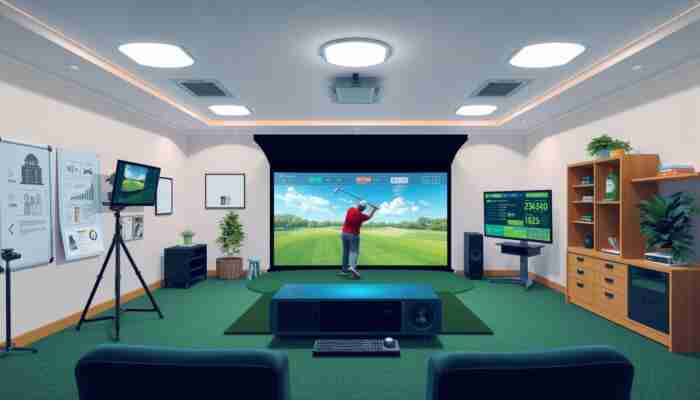
A basic home golf simulator usually starts around $3,000 to $7,000, a stronger mid-range build often lands around $7,000 to $15,000, and a premium setup can easily reach $15,000 to $30,000+. Very high-end dedicated sim rooms can go well beyond that.
How Much Does a Home Golf Simulator Cost?
The most useful way to answer this question is by setup tier. Search demand around this topic clusters heavily around broad cost terms like home golf simulator cost and indoor golf simulator cost, which means users usually want range-based planning more than a single fixed number.
In practice, the cost changes most when you move up in launch monitor quality, screen and enclosure quality, projector fit, and room finish. That is why two setups can both be called “home golf simulators” while having very different total budgets.
What Drives the Cost of a Home Golf Simulator?
The total cost is not determined by one component. It is the result of several connected decisions, and the biggest jumps usually happen when the build moves from a practical setup to a more immersive room.
1. Launch monitor
The launch monitor is usually the biggest single cost driver because it determines data quality, simulator compatibility, and how advanced the setup feels. It often makes the most sense to choose the monitor class first, then build the rest of the budget around it.
If you are still deciding what level of system you actually need, compare
portable launch monitors
before locking in the rest of the setup.
2. Projector
Projector cost depends on brightness, throw ratio, mounting needs, and how well it matches the screen size. In many home builds, the more useful question is not “How much is the projector?” but “What projector actually fits this room without compromise?”
If you need help on the fit side, review
short throw projectors for golf simulators
before setting your visual budget.
3. Screen and enclosure
The screen is one of the strongest support topics around simulator cost because users clearly understand it affects image quality, bounce-back, durability, and the overall feel of the room. The enclosure adds both protection and finish, which means this part of the budget can stay modest or climb quickly depending on the level of polish you want.
To see where your money matters most here, compare
golf simulator screens
first.
4. Hitting mat and turf
Mats do not always look like the biggest budget item on paper, but they affect comfort, realism, and repeat use more than many buyers expect. A poor mat can make a home build feel cheaper even when the rest of the hardware is solid.
5. Software and computer requirements
Some builds need more software spending than others, and if your simulator platform requires a stronger PC, the real cost can increase beyond the hardware you first budgeted for. Buyers often underestimate this part when planning the setup.
6. Installation and room preparation
The more dedicated the room, the more likely it is that mounting, flooring, lighting control, electrical work, and finishing details will raise the true project cost.
Typical Cost Breakdown by Component
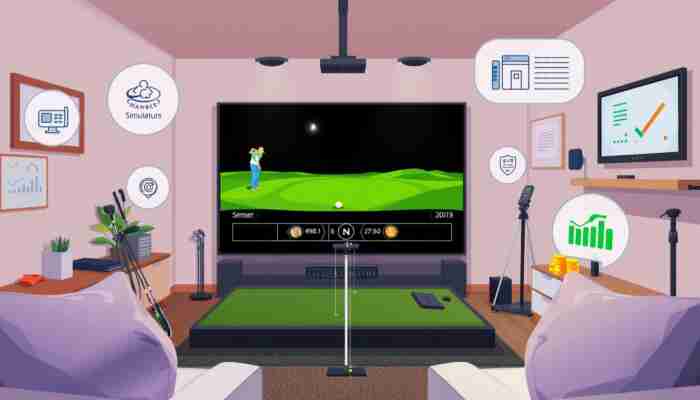
| Component | Budget Range | Mid-Range | Premium Range |
|---|---|---|---|
| Launch monitor | $500 to $2,500 | $2,500 to $7,000 | $7,000 to $20,000+ |
| Projector | $500 to $1,200 | $1,200 to $2,500 | $2,500 to $5,000+ |
| Impact screen | $300 to $800 | $800 to $1,500 | $1,500 to $3,000+ |
| Enclosure | $500 to $1,500 | $1,500 to $4,000 | $4,000 to $10,000+ |
| Hitting mat / turf | $250 to $700 | $700 to $1,500 | $1,500 to $3,000+ |
| Software / PC | $0 to $1,500 | $1,500 to $3,000 | $3,000 to $5,000+ |
| Install / room prep | DIY to $1,500 | $1,500 to $5,000 | $5,000 to $15,000+ |
How Much Does a Budget Home Golf Simulator Cost?
A realistic budget home golf simulator usually starts around the low thousands, but truly usable builds typically land closer to the mid-thousands once you include the core system rather than just a single hitting device. This tier works best when you accept smart trade-offs instead of trying to force premium expectations into an entry-level budget.
At this level, the main goal should be playability and upgrade potential. A balanced budget setup usually matters more than chasing one premium component while compromising everything else.
Budget setup focus
Prioritize the launch monitor first, then the screen, then the projector. That order usually protects both usability and upgrade flexibility.
How Much Does a Mid-Range Home Golf Simulator Cost?
Mid-range is where many home golfers find the strongest value. This is the tier where better image quality, more reliable screen performance, and a stronger simulator feel begin to work together. It is also the point where the room starts to feel less like a workaround and more like a real home simulator space.
Most buyers looking at home golf simulator cost are effectively deciding whether they should stay entry-level or move into this tier.
How Much Does a Premium Home Golf Simulator Cost?
Premium setups cost more because they solve more than the basic question of “Can I hit balls indoors?” They improve data quality, image quality, screen performance, room finish, safety, and the overall feeling of immersion. A premium room often becomes expensive not because one component is extreme, but because the entire system is optimized.
What Room Factors Change the Cost Most?
Garage vs dedicated sim room
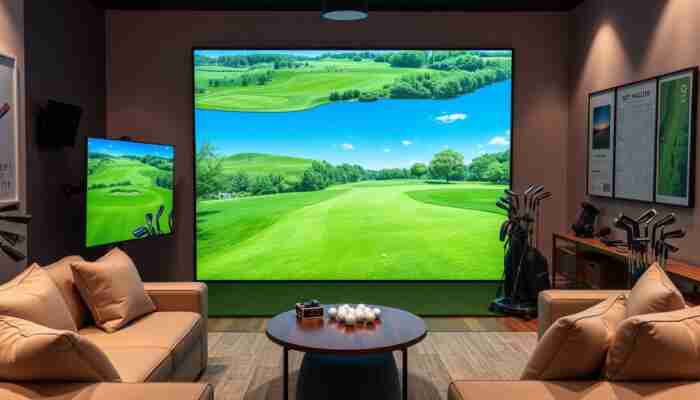
A garage setup can be more budget-friendly if you keep the room practical, but lighting, durability, and flexibility often become bigger considerations. A dedicated sim room usually costs more because the build tends to move toward higher finish and stronger visual integration.
Room depth and ceiling height
Tight rooms often create more projector and monitor constraints, which can force more careful equipment selection. Sometimes a room limitation does not lower cost. It simply changes where the budget has to go.
Lefty-righty shared use
Shared-use setups can increase cost because they place more demand on room width, hitting position, and monitor practicality.
| Room Factor | Why It Changes Cost | Most Affected Component |
|---|---|---|
| Limited depth | Forces more careful projector and monitor selection | Projector and launch monitor |
| Low ceiling | Can limit club use and screen size | Screen and layout |
| Garage environment | Raises importance of durability and brightness | Screen and projector |
| Shared use | Adds layout and monitor demands | Launch monitor and hitting zone |
Hidden Costs Many Buyers Miss
How to Budget for a Home Golf Simulator the Smart Way
The smartest budgeting model is to start with the type of experience you want, then build backward into component priorities. That keeps the simulator aligned with intent instead of letting the room become a pile of random purchases.
A simple budgeting sequence
- Measure the room first
- Choose the launch monitor class
- Match the projector to the room
- Choose the right screen and enclosure level
- Set aside budget for software, install, and upgrades
Best Next Step Based on What Is Driving Your Budget
If the launch monitor will decide the budget
Compare portable launch monitors first and build the rest of the budget around that choice.
If room fit is the biggest concern
Look at short throw projector options before spending too much on the wrong visual setup.
If the screen and enclosure side feels unclear
Compare simulator screens to see where durability and image quality justify the price.
FAQ
How much does a home golf simulator cost on average?
For most buyers, the meaningful answer is a range rather than a single average. Many usable home builds land somewhere between about $3,000 and $15,000, while premium rooms go well beyond that.
Can I build a home golf simulator for under $5,000?
Yes, but the setup usually needs smart compromises. The most reliable path is to prioritize a practical launch monitor, a workable screen solution, and a room layout that does not force expensive projector mistakes.
What is the biggest cost in a home golf simulator setup?
In many builds, the launch monitor is the biggest single cost driver. After that, the screen, enclosure, projector, and room finish usually decide whether the budget stays practical or moves into premium territory.
Do I need a projector for a home golf simulator?
Not for every practice setup, but a projector is what makes a full simulator room feel immersive. If the goal is a true visual simulator experience rather than a basic data station, a properly matched projector usually belongs in the budget.
Are there ongoing costs after the initial setup?
Yes. Software subscriptions, occasional hardware upgrades, turf or screen wear, and future room refinements can all add to the total long-term cost.
What is the smartest way to reduce cost without ruining the build?
Start with the room and the launch monitor, then match the projector and screen around those constraints. That approach reduces mismatch and protects your upgrade path better than randomly cutting one component after another.
Conclusion
The real cost of a home golf simulator depends on what level of simulator you are actually trying to build. The difference between a practical setup and a premium room is not just price. It is how well the room, monitor, projector, screen, and finishing details work together.
If you want to budget intelligently, do not start with one generic cost number. Start with the room, the launch monitor class, and the visual quality you want. That is how you end up with a simulator that fits both your space and your budget.

Megan Thompson is an accomplished author and expert on indoor golf simulators, dedicated to helping golf enthusiasts enhance their game at home. With a passion for technology and sports, she explores the latest advancements in simulation equipment and offers insightful tips for players of all skill levels. Her engaging writing not only demystifies the complexities of indoor golf but also highlights its benefits for training and recreation, making her a trusted voice in the industry.
Discussion
38 Responses
I appreciate the breakdown of home golf simulator setups! It’s like being a kid in a candy store, but instead of candy, we’re picking between launch monitors and projector setups—neither of which will give you a sugar rush, but both can definitely give you a swing rush!
It’s interesting to see how the market for home golf simulators has evolved, especially in the past few years. As someone who has been considering making the leap into this space, I am struck by how important it is to be methodical in our approach to budgeting—a comprehensive cost understanding can truly make or break the decision process.
You’ve touched on a key point—understanding the costs involved really does make a difference when entering the home golf simulator market. It’s easy to feel drawn in by the high-tech features and promises of these systems, but the financial aspect can sometimes catch people off guard.
“I’m glad to hear you’re considering a home golf simulator! For a deeper dive into budgeting and exploring options, check out this helpful resource that can guide you through the decision-making process.”
https://golfsimplanet.com/Carl'sPlaceC-SeriesDIYGolfSimulatorEnclosureKitwithImpactScreen
You’ve hit on a crucial aspect of the growing home golf simulator market: the importance of budgeting. As you mentioned, taking a methodical approach really can make a difference, especially when so many options are available ranging from basic setups to high-end systems that mimic a real-life driving range or golf course. The evolution over the past few years has not just been about technology but also about how we view the overall investment.
“Absolutely! A thoughtful approach to budgeting is key. To help you navigate this exciting journey, check out our comprehensive guide on home golf simulator costs and options.”
https://golfsimplanet.com/Carl'sPlaceGolfRoomCurtain
I appreciate your thoughts on the evolution of home golf simulators—it really has been quite a journey. As you’re weighing the decision, considering the budget is a smart move. It’s easy to overlook how costs can add up, not just for the initial setup but for ongoing maintenance and upgrades too.
“I’m glad to hear you’re considering a home golf simulator! To help you navigate your budgeting process, we’ve put together a detailed guide that breaks down the costs and options available. Check it out here!”
https://golfsimplanet.com/NVISAGESimulators
This cost guide is really helpful for anyone looking to make the leap into the world of home golf simulators. I’ve been toying with the idea myself, especially with the winter months coming up. Playing indoors sounds like a cozy way to keep up with my swing, but the price tags can be a bit daunting!
It’s great to hear you’re considering a golf simulator, especially with winter on the horizon. Playing indoors can definitely keep your skills sharp and even provide a nice break from the chill. It can feel overwhelming when you first look at the prices, but there are various options that can cater to different budgets and setups.
I’m glad you found the guide helpful! If you’re ready to explore your options, check out this link for some great deals on home golf simulators that might fit your budget. Happy swinging!
https://golfsimplanet.com/SkyTrakEssentialSoftware
This cost guide sheds light on a crucial aspect of investing in a home golf simulator. I particularly appreciate your emphasis on understanding the various components that contribute to the final price. For instance, while opting for a high-quality launch monitor may stretch the budget, it could enhance the practice experience significantly for those serious about improving their game.
You’ve brought up an essential point about the importance of investing in quality components for a home golf simulator. When it comes to equipment like a launch monitor, the initial price tag can certainly make you pause. However, if you’re genuinely passionate about improving your game, those enhanced features can be a game changer. A more accurate launch monitor doesn’t just track your swing speed or ball direction; it provides valuable insights into how to refine your technique over time, which can make a notable difference in your performance.
I’m glad you found the cost guide helpful! If you’re looking to explore some top-quality launch monitors and golf simulator setups that can enhance your game, check out this curated selection.
https://golfsimplanet.com/SIGGolfSimulatorBlackoutScreen
You’ve really nailed it with your observations about launch monitors and their impact on improving one’s game. It’s interesting how the right technology can elevate not just performance but also the overall experience of playing golf. When you invest in quality components, you’re not just buying equipment—you’re creating an environment that fosters growth and learning.
This cost guide serves as a useful foundation for anyone considering a home golf simulator; understanding the various components certainly clarifies the investment. Personally, I find that while the initial costs can be daunting, the potential for year-round practice and improvement is invaluable, especially for those of us in areas with limited access to courses during the winter months.
This is a really insightful breakdown of the costs involved with setting up a home golf simulator. It’s interesting to see how much the pricing can vary based on the components you choose. I’ve been toying with the idea of getting one for my garage, but every time I look into it, I’m overwhelmed by the options and price ranges.
This guide really captures the complexities of setting up a home golf simulator. I’ve been considering one myself, and I started off thinking it would just be a straightforward purchase. But, as you pointed out, it’s much more about tailoring the setup to my specific space and goals.
The topic of investing in a home golf simulator resonates with so many golfers who seek to elevate their game while enjoying the convenience of practicing at home. I appreciate the nuance of the cost breakdown you provided—it underscores that this is not just a matter of picking a price tag, but rather, it’s about aligning the correct setup with personal goals and available space.
It’s great to hear that the article struck a chord with you. Investing in a home golf simulator really can be a game changer, especially when you consider all the nuances like the space you have available and your specific goals. It’s about finding that balance—not just with the budget, but also ensuring the technology matches your skill level and progression.
“To help you explore the perfect home golf simulator setup tailored to your needs, check out our curated guide here!”
https://golfsimplanet.com/LockDockforForesightGC3&BushnellLaunchPro
The cost implications you’ve outlined for a home golf simulator really resonate with me, especially as someone who has been contemplating investing in one for my own space. It’s interesting how the setup can vary so significantly based on individual preferences and priorities. For instance, I’ve noticed that some of my friends prioritize high-quality launch monitors and software to really hone their skills, while others are more focused on creating a social environment with the best projector and screen setup for entertaining guests.
Your breakdown of home golf simulator costs is incredibly insightful, particularly the emphasis on understanding what setup tier aligns with individual goals and space. As someone who has been contemplating investing in an indoor simulator, it’s a little overwhelming to see the wide price range, but you’ve helped clarify that it’s more about personal preferences and usage than just a sticker price.
I completely relate to how overwhelming the variety of options can seem when considering an indoor golf simulator. It’s definitely not just about the initial price; it feels like a balancing act between your available space and how often you plan to use it. I remember when I was in a similar situation, weighing the benefits of different setups and trying to visualize how it would fit into my home routine.
You’ve touched on such an essential aspect of investing in a home golf simulator—the need to personalize the setup according to one’s unique goals and environment. I’ve come to appreciate that it’s not merely about purchasing the most expensive equipment but rather about finding the right balance between quality and practicality.
Your post on home golf simulator costs really hits home for me. I’ve been toying with the idea of setting up my own simulator, especially with how the golfing culture has evolved over the last few years. The pandemic drove many of us to seek new hobbies, and it seems there’s been a surge of interest in home golf setups. It’s fascinating to see how technology is transforming the game.
It’s interesting to hear how the pandemic shifted so many of our interests, especially in finding new ways to engage with hobbies like golf. The rise of home golf simulators really reflects a broader trend of blending technology with traditional activities.
I’m glad to hear you’re inspired by the evolving golf culture! If you’re considering setting up your own simulator, check out this resource that explores some great options to get started.
https://golfsimplanet.com/Carl'sPlaceGolfRoomCurtain
This cost guide for home golf simulators highlights such an important aspect of the modern golfing experience, especially as so many of us are looking for ways to practice and enhance our skills from the comfort of home. The price range you’ve outlined really drives home the variety of options available today, from basic setups to high-end experiences that rival the best greens.
You’ve brought up some really important points about the cost structure for home golf simulators. As someone who spent quite a bit of time researching options for a personal setup, I can definitely relate to the variety of choices and the subsequent confusion they can create.
You’ve really tapped into something significant in your experience with home golf simulators. It’s a journey that many of us can relate to, balancing the desire for quality performance with the constraints of budget and space.
Reading through your cost guide for home golf simulators opens up a lot of interesting avenues for discussion. The range of prices you’ve mentioned really highlights the diversity in what golfers seek—everything from a basic setup for practice to a high-end immersive experience. Personally, I’ve always thought about the trade-offs involved in making such an investment.
You bring up a really interesting point about the trade-offs involved in investing in a home golf simulator. It’s fascinating when you think about how different golfers have such varying needs and preferences. For some, it’s all about just being able to practice their swing during those long winter months, while others want that full-on immersive experience, complete with realistic courses and advanced features.
Absolutely, the trade-offs can be fascinating! If you’re considering a home golf simulator, you might find this resource helpful in navigating all the options available to you. Check it out!
https://golfsimplanet.com/indoor-golf-simulators-your-ultimate-practice-solution-in-scottsdale-az
This is such a useful breakdown! I’ve been toying with the idea of setting up a home golf simulator for a while now, and the wide range of costs can be pretty daunting. You’re so right about the importance of figuring out what you really want out of the setup.
Your insights on the costs associated with setting up a home golf simulator provide a vital perspective for anyone considering this investment. The variability in pricing certainly underscores the importance of aligning one’s budget with personal goals and space considerations.
I completely agree with your perspective on budgeting for a home golf simulator. It really can feel overwhelming given the wide range of options available, from budget-friendly setups to high-end systems that promise a real-life experience. Aligning the investment with personal goals is crucial; whether someone is an avid golfer looking to improve their game or just someone wanting a fun way to unwind, their choices will vary significantly.
Ah, the world of home golf simulators—truly a fascinating realm where the boundaries of indoor leisure and high-tech gadgetry collide! It’s like bringing the magic of Pebble Beach right into your living room, without the pesky planes overhead or that one guy who insists on using a driver when everyone else is putting on the 18th hole.
You’re spot on about the world of home golf simulators—it really does feel like a blend of indoor leisure and tech magic. I recently tried one out, and I was surprised by how immersive the experience can be. The graphics and feedback were impressive, making it feel like I was actually on the course. No need to worry about my swing getting disrupted by a rogue gust of wind or errant golf balls flying around.
I appreciate how you’ve broken down the cost components of a home golf simulator. It’s such a big investment, and many people may not realize that costs can escalate quickly if they’re not careful. I remember when I first started looking into getting a home setup; I was immediately overwhelmed by the sheer number of options and add-ons available.
Your cost guide on home golf simulators serves as a valuable resource for anyone contemplating this investment, and I can appreciate how layered the decision-making process must be. As someone who has been involved in golf simulation for a few years now, I can attest to the significant variance in experiences offered by different setups.
It’s great to hear from someone with firsthand experience in golf simulators. You make an excellent point about the variance among different setups. The more you dive into this world, the more you realize how personal the choice of simulator can truly be.
“Thank you for your thoughtful insights! If you’re looking to dive deeper into enhancing your golf simulation experience, check out this comprehensive guide we put together.”
https://golfsimplanet.com/FlightScopeDIYSimulator
This guide on home golf simulators resonates with so many people who are passionate about golf, especially as the sport becomes increasingly accessible through technology. It’s fascinating to think about how far golf has come; no longer do we have to wait for a sunny day to hit the greens. Instead, we can have a tailored experience right in our living rooms. The nuances you mentioned, like selecting the right combination of launch monitors, screens, and enclosures, highlight just how customizable these setups can be.
This cost breakdown is really helpful, especially when you think about how personal each golf simulator setup can be. When I was looking into getting one for my own space, I felt overwhelmed by the options—everything from launch monitors to the type of software can really affect not just the price but the overall experience.
This cost breakdown is incredibly helpful for anyone considering a home golf simulator, especially since it emphasizes the importance of aligning your setup with your personal goals and space. I’ve recently looked into this for my place, and it’s clear that the investment can vary significantly based on what features matter most to you.
This cost guide is such a valuable resource for anyone considering a home golf simulator! It really underscores the importance of tailoring the setup to your specific needs and goals. I’ve been contemplating this investment myself, and understanding the various components and their impact on pricing has made me rethink my approach.