
Table of Contents
- What Actually Makes a Launch Monitor Accurate?
- The Main Factors That Affect Launch Monitor Accuracy
- Which Launch Monitor Features Actually Matter Most?
- Portable vs Overhead vs Standard Launch Monitor Paths
- The Biggest Mistakes People Make When Comparing Launch Monitors
- Best Next Step Based on Your Goal
- FAQ
- Conclusion
Launch Monitor Comparison Guide
Golf Launch Monitor Accuracy & Features: How to Compare What Matters
A golf launch monitor can completely change the way you practice, but only if it gives you the right data in the right setting. The most expensive model is not always the best choice. The best launch monitor is the one that delivers useful accuracy, the right feature set, and a setup path that actually fits how and where you play.
That is why comparing launch monitors is about much more than brand names. You need to understand what affects accuracy, which features are essential for your goals, and whether a portable, overhead, or room-based setup makes the most sense for your practice style.
If you want to compare the main buying paths first, start with
launch monitors,
portable launch monitors,
overhead launch monitors,
and
swing analysis tools.
Quick answer
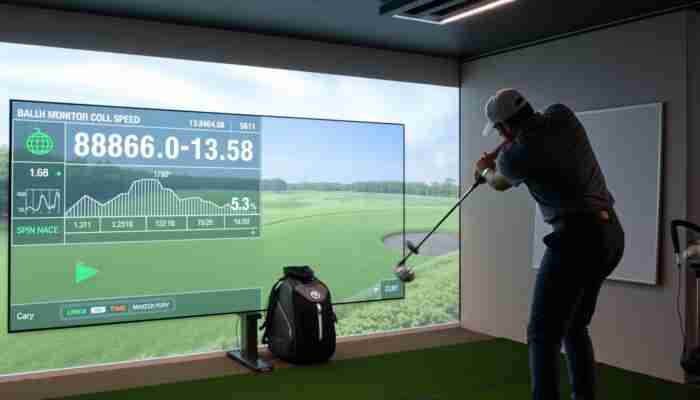
The best way to compare golf launch monitors is to focus on accuracy in your real environment, the data points you actually need, indoor vs outdoor fit, software quality, and ease of repeat use. A launch monitor only creates value when the data helps you practice better, make smarter equipment decisions, or build a more useful simulator setup.
What Actually Makes a Launch Monitor Accurate?
Launch monitor accuracy is not just a brand promise. It depends on how the device captures data, what conditions it is designed for, and how well it is set up. A model can be excellent in one environment and much less useful in another.
The most important point is this: accuracy only matters when it is consistent enough to support real decisions. If you are using the device to practice, compare clubs, or build a home simulator setup, the data has to be reliable enough to show patterns instead of random noise.
Accuracy is strongest when…
- the monitor suits the environment
- setup and alignment are correct
- the measured metrics match the use case
- the software presents data clearly
- results stay repeatable over time
Accuracy becomes weaker when…
- the monitor is used outside its ideal setting
- setup is rushed or misaligned
- buyers expect more data than the device is built to provide
- environmental conditions are ignored
- the data is read without context
The Main Factors That Affect Launch Monitor Accuracy
1. Measurement technology
Different launch monitors rely on different approaches to capture ball and club data. Some are built around radar-style tracking. Others rely on camera-based systems. Some are designed to work especially well indoors, while others are stronger when they have more room to read full ball flight.
2. Indoor vs outdoor use
A launch monitor that performs well outdoors is not automatically the best indoor option. If your real goal is a home simulator room or net-based practice, that environment should shape the decision first.
3. Setup quality
Alignment, positioning, ball placement, and usable space all affect measurement quality. Even a strong monitor can feel disappointing if the setup is poor or inconsistent from session to session.
4. The type of data you expect
Some golfers mainly want reliable ball flight and distance metrics. Others want deeper club-delivery insight, simulator integration, or more advanced shot analysis. Accuracy should always be judged against the data you actually need, not against a generic feature list.
5. Software and data presentation
A launch monitor is more useful when the software makes the data easy to understand and apply. This matters for both practice and simulator use. If the interface is weak, even good numbers become harder to turn into better decisions.
| Accuracy factor | Why it matters | Common mistake |
|---|---|---|
| Technology type | Shapes what the monitor reads best | Assuming all systems measure the same way |
| Environment | Affects measurement quality | Buying for the wrong practice setting |
| Setup consistency | Improves repeatability | Rushing alignment and placement |
| Data depth | Matches the golfer’s real goals | Paying for unused metrics |
| Software quality | Makes data actionable | Ignoring the user experience layer |
Which Launch Monitor Features Actually Matter Most?
Ball data quality
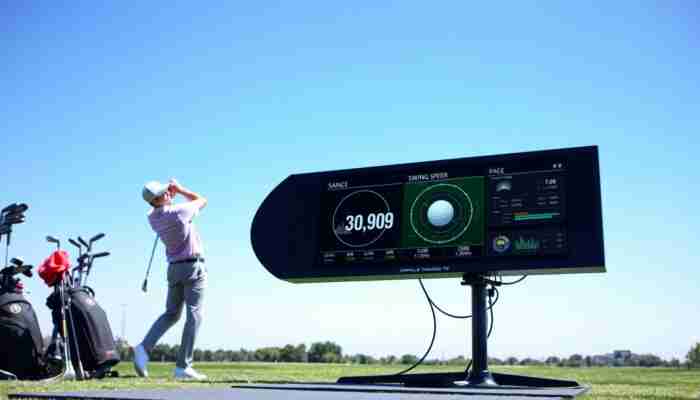
For many golfers, clean ball data is the foundation. If the monitor cannot deliver reliable information on speed, launch behavior, and shot pattern, the rest of the experience becomes much less useful.
Club data depth
Some players want deeper swing insights, while others do not need them. Club data matters more when the goal is technique work, coaching, or more advanced practice analysis.
Simulator compatibility
If the monitor will be part of a simulator setup, compatibility matters a lot. That includes software support, room fit, and how easily the device integrates with your total home setup.
Portability and everyday use
Portability matters when you want easy practice at different locations or a simpler setup path. This is where
portable launch monitors
become especially relevant.
Overhead convenience and room flow
In dedicated simulator rooms, overhead systems can be a stronger fit because they simplify the hitting area and keep the floor layout cleaner. That is where
overhead launch monitors
become a meaningful comparison path.
A smarter feature checklist
- Start with your real practice environment
- Choose the data depth you truly need
- Check simulator and software fit
- Decide whether portability matters
- Favor repeatable usefulness over marketing-heavy extras
Portable vs Overhead vs Standard Launch Monitor Paths
| Type | Best for | Main strength | Main trade-off |
|---|---|---|---|
| Portable launch monitor | Flexible practice and easier entry | Convenience | May not be the best fit for every simulator room |
| Overhead launch monitor | Dedicated simulator rooms | Cleaner room integration | Less flexible and often more room-dependent |
| Standard non-overhead home setup path | Balanced home simulator use | Broad compatibility | Needs careful placement and setup logic |
Good next brand-level comparisons here are
Foresight Sports launch monitors,
FlightScope launch monitors,
Uneekor launch monitors,
and
SkyTrak launch monitor.
The Biggest Mistakes People Make When Comparing Launch Monitors
Best Next Step Based on Your Goal
If you want the main commercial comparison path
Start with the main launch monitors page.
If flexibility and easier setup matter most
Compare portable launch monitors first.
If you are building a dedicated simulator room
Review overhead launch monitors next.
If your real goal is better practice data
Pair the monitor decision with swing-analysis logic.
FAQ
How accurate are golf launch monitors?
Good golf launch monitors can be very accurate, but accuracy depends on the technology, the environment, and the quality of the setup. The right device in the right setting matters more than a generic accuracy claim.
What features matter most in a launch monitor?
The most important features are the ones that support your actual use case: reliable ball data, the right club data depth, simulator compatibility, software quality, and practical ease of use.
Are portable launch monitors accurate enough?
For many golfers, yes. Portable launch monitors can be an excellent fit when convenience and flexible practice matter most. The key is choosing one that matches the environment and the level of data you truly need.
Is an overhead launch monitor better for a home simulator?
It can be, especially in a dedicated simulator room where cleaner floor flow and permanent setup logic matter. It is not automatically better for every golfer, but it can be the stronger fit in the right room.
What is the biggest mistake when comparing launch monitors?
The biggest mistake is comparing feature lists without asking how and where the device will really be used. A monitor only has value when its data and setup logic fit the golfer’s actual environment.
Do launch monitors help improve your golf game?
They can help a lot when they provide data you understand and use consistently. The improvement comes from turning the information into better practice, smarter gapping, and more informed equipment choices.
Conclusion
A great launch monitor is not the one with the most impressive marketing. It is the one that fits your environment, gives you the right level of data, and makes your practice more useful over time.
The smartest way to compare launch monitors is to focus on what actually changes the golfer’s experience: accuracy in your real setting, features that match your goals, and a setup path that works long term. When those pieces align, the launch monitor becomes far more than a gadget. It becomes one of the most valuable tools in your golf system.

Lila Chambers is an avid golf enthusiast and author who specializes in writing about indoor golf simulators. With a passion for blending technology and sport, she explores how these innovative systems enhance the golfing experience, making the sport accessible year-round. Lila’s insightful articles provide valuable information for both casual players and dedicated golfers, helping them navigate the world of indoor golf with ease.
Discussion
17 Responses
Your insights into the complexities of launching monitors raise critical points about the often overlooked nuances of technology in golf. One of the aspects that resonated with me is the notion that the most expensive model doesn’t necessarily translate to the best fit for every player. In my experience, I’ve often seen golfers invest heavily in renowned brands, only to find that the data they provide isn’t aligned with their specific practice needs or playing conditions.
I really appreciate you sharing your thoughts; it’s a nuanced conversation that often gets buried beneath the shiny marketing of big brands. Your experience echoes a key point: the idea that a high price tag doesn’t guarantee a better fit for every golfer.
Thank you for your thoughtful comment! If you’re interested in exploring monitors that cater specifically to your practice needs and playing conditions, check out this resource that delves into finding the perfect fit for every golfer.
https://golfsimplanet.com/indoor-golf-simulators-your-ultimate-practice-solution-in-scottsdale-az
You’ve hit on a key point that often gets brushed aside in discussions about tech in golf. It’s easy to assume that a higher price tag equates to higher performance, but as you’ve observed, the reality can be much more nuanced. Golf is such a personal game, and what works wonders for one player might completely miss the mark for another.
Absolutely, your experience underscores the importance of finding the right match for individual needs. If you’re curious to explore monitors that cater more specifically to your practice style, check out this resource for tailored options that might just elevate your game!
https://golfsimplanet.com/HomeCoursesideNetting
Your insights into the nuances of choosing a golf launch monitor are spot on, particularly the emphasis on how individual practice styles can drastically influence the decision-making process. Many golfers, myself included, often lean towards recommendations based solely on brand reputation or price point, overlooking the critical evaluation of features that truly align with our specific needs.
It’s great to hear your perspective, especially since many golfers face that same dilemma. The tendency to lean on brand reputation or price can cloud the judgment we need when selecting a launch monitor. Features that cater to our specific practice styles can make a significant difference in our improvement.
“Thanks for your thoughtful comment! If you’re looking to dive deeper into the features that matter most for your practice style, check out this resource that breaks down the best options tailored to different needs.”
https://golfsimplanet.com/SwingCaddieSC200/SC200PlusPouch
You make an excellent point about the necessity of focusing on the right features and accuracy rather than just going for the most expensive model. I’ve found that having a launch monitor that aligns with my specific practice goals has been a game changer. For instance, when I switched to a portable model, it allowed me to practice in various environments, which I hadn’t considered before.
I appreciate how you highlight the importance of choosing the right launch monitor based on individual needs rather than just going for the top-priced option. I’ve had my fair share of frustration with devices that promise a lot but don’t deliver the necessary data for my practice. For instance, I initially bought a high-end stationary model, thinking it would provide the most accurate readings. However, I ended up getting better results from a mid-range portable model that I could use both at the range and for practice at home.
I can’t help but chuckle at the idea of making friends with my launch monitor—it’s the only “partner” on the course that doesn’t complain about my swing! Seriously though, you make a great point about accuracy and relevant data being key. I’ve learned the hard way that fancy gadgets don’t guarantee a better game if they don’t align with how I actually practice.
I can totally relate to that—there’s something comforting about having a reliable partner that just gives you the data, right? It’s refreshing to focus on the numbers without the added critiques. I think that’s one of the intriguing things about golf tech; when used correctly, it can really bridge the gap between practice and performance, but it has to mesh with your personal style.
Your insights on the importance of matching a launch monitor to individual practice styles really resonate with me. In my own experience, I’ve found that understanding the specific metrics that matter to my game has been pivotal. For instance, while I initially invested in a high-end model after reading all the rave reviews, it turned out that the metrics I needed most—such as ball speed and launch angle—were available on a more budget-friendly device. This realization not only saved me some money but also made my practice sessions much more aligned with my goals.
Your insights on the various factors to consider when choosing a golf launch monitor really resonate with me. It’s interesting how we often get caught up in brand reputation or price without delving into what truly aligns with our practice needs. I’ve experienced firsthand the frustration of investing in a high-end model that didn’t translate into better performance because it lacked the specific data points I was targeting.
I found your guide on launch monitors to be quite insightful, particularly in emphasizing that the most expensive model isn’t necessarily the best fit for everyone. As someone who has dabbled in golf for a few years, I’ve learned that the effectiveness of a launch monitor truly depends on the specific needs of the individual golfer.
This is such a crucial point about launch monitors! I recently upgraded my setup and realized just how important it is to match the monitor to my practice style. I went for a portable model because I often hit at different ranges, and it’s been a game changer. The data I’m getting is definitely more relevant to my actual playing conditions, especially since I tend to practice on the go.
This is a fantastic guide! I’ve always thought of my golf game as my “Inner Space Odyssey”—it’s like an epic journey where I’m trying to communicate with the little white ball, but more often than not, it seems to be doing its own thing! A good launch monitor really feels like mission control—without it, I’m just aiming blind.
I really appreciate the emphasis you’ve placed on understanding what makes a launch monitor truly effective! In my own experience, I found that the features I thought I wanted initially were not as important as having consistent accuracy. For instance, I started with a portable model that was great for easy setup, but I ended up valuing the more detailed swing analysis of a stationary monitor when I could hit at a dedicated space.
I really appreciate how you’ve highlighted the importance of not just looking at price or brand when it comes to launch monitors. It can be so tempting to go after the flashiest, most expensive model, thinking that it will automatically improve our game. In my experience, though, that’s not always the case. I once invested in a high-end model that ended up being more complicated than beneficial. Sure, it boasted cutting-edge technology and tons of features, but the data it provided wasn’t always practical for my actual practice routines.
This comparison guide on golf launch monitors is particularly timely for many who are looking to enhance their practice regimen. As someone who has spent considerable time deliberating on the selection of a launch monitor, I can attest to the complexities involved in making an informed decision.