
Table of Contents
- Why Indoor Golf Works So Well in Las Vegas
- What Kind of Indoor Golf Experience Fits You Best?
- What Should You Look for in a Las Vegas Simulator Bay?
- When a Home Golf Simulator Makes More Sense in Las Vegas
- What to Compare Before Building a Home Setup
- Mistakes to Avoid with Indoor Golf in Las Vegas
- Best Next Step Based on What You Want
- FAQ
- Conclusion
Las Vegas Indoor Golf Guide
Indoor Golf Simulators in Las Vegas: Year-Round Fun, Practice & Play
Indoor golf in Las Vegas can mean very different things depending on what you want from the experience. Some golfers want a lively social setting for an hour or two of fun. Others want a quieter simulator bay that helps them practice seriously. And for some players, a few local sessions are what finally convince them to build a simulator at home.
The best choice comes down to one question: are you looking for entertainment, structured practice, event-friendly golf, or a long-term setup you can use whenever you want? Once that is clear, the right indoor golf option becomes much easier to choose.
If you already know you want your own setup instead of repeatedly booking simulator time, start by comparing
golf simulators,
launch monitors,
simulator screens,
and
short throw projectors.
Quick answer
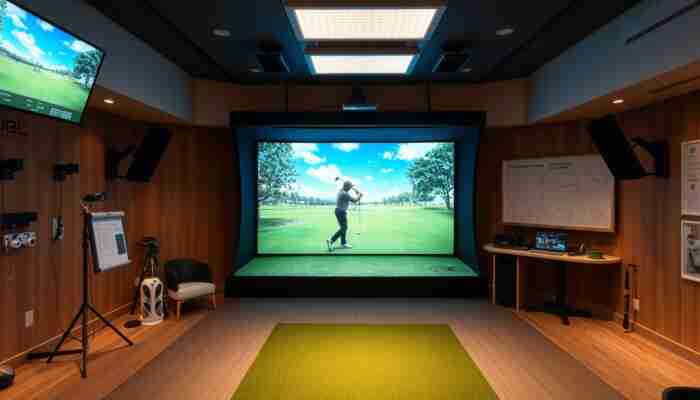
Las Vegas has indoor golf options for social play, private practice, group events, and more serious year-round training. The best choice is the one that matches how you want to use it. If you want casual fun, a public simulator venue may be enough. If you want privacy, frequent reps, and more control over your routine, a home golf simulator often becomes the better long-term answer.
Why Indoor Golf Works So Well in Las Vegas
Las Vegas is one of the easiest cities to understand the appeal of indoor golf. You can play year-round, avoid weather extremes, fit practice into a busy schedule, and choose an experience that feels either relaxed and social or focused and performance-driven.
That flexibility is the real advantage. Indoor golf gives locals and visitors a way to keep playing without having to organize a full outdoor round every time. It also gives serious golfers a place to work on swing changes, ball striking, and course management in a more controlled environment.
Indoor golf is a strong fit when you want…
- year-round access
- shorter, easier golf sessions
- practice without a full course commitment
- group-friendly entertainment
- more control over practice conditions
It becomes a weaker fit when you expect…
- every venue to feel like a private studio
- every simulator bay to be equally useful for training
- random sessions to automatically improve your game
- a social venue to behave like a coaching environment
- booking convenience to replace a real practice plan
What Kind of Indoor Golf Experience Fits You Best?
Social simulator venue
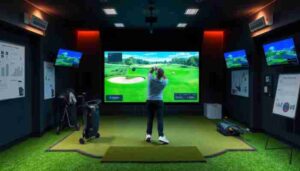
This is usually the best choice when the main goal is fun, food, drinks, casual rounds, or introducing friends to simulator golf. These spaces work well when golf is part of a bigger entertainment plan.
Private or quieter practice bay
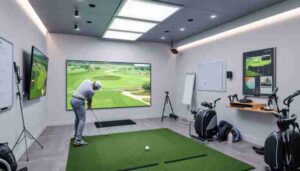
This option makes more sense when the real goal is better ball striking, cleaner feedback, or a more focused session. Golfers who want useful reps usually do better in a setting that feels less public and less rushed.
Mobile simulator rental for events
Mobile setups are a good match for parties, corporate events, and temporary experiences where flexibility matters more than a permanent room. They solve a different problem than a practice bay or a home build.
Home golf simulator
A home setup starts to make the most sense when you want frequent access, more privacy, and a simulator environment built around your own goals rather than around someone else’s booking schedule.
| What you want most | Best direction | Why |
|---|---|---|
| Casual fun and group play | Social simulator venue | Best for entertainment and easy access |
| Focused sessions and better feedback | Private or quieter practice bay | Better for real golf work |
| Events and temporary setup | Mobile simulator rental | Best when mobility matters |
| Frequent year-round use on your own terms | Home golf simulator | Strongest long-term control and privacy |
What Should You Look for in a Las Vegas Simulator Bay?
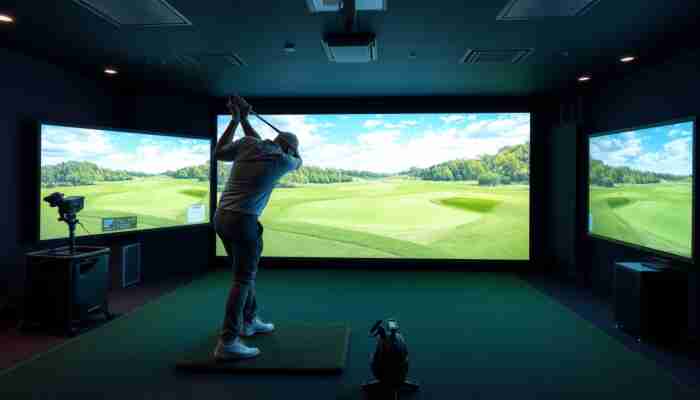
Tracking quality
If you care about actual improvement, the simulator has to give feedback you can trust. A bay that feels fun but does not feel useful for shot analysis is a very different product from one that supports better practice.
Comfort and swing space
A simulator should let you swing naturally. If the room feels cramped, awkward, or distracting, the session becomes less valuable very quickly.
Privacy level
Some golfers do not care who is watching. Others practice much better when they can focus without feeling visible. That difference matters more than many people think.
Software and course experience
A better simulator session usually feels smoother because the software, visuals, and overall flow all support the experience. If you want that kind of setup at home, it helps to compare
golf simulator software
before you compare everything else.
Ease of repeat use
The more often you want to use indoor golf, the more important convenience becomes. That is usually the point where occasional bookings stop feeling efficient and home ownership becomes more attractive.
Good rule of thumb
If a simulator session leaves you wanting more structure, more privacy, or more time than a booking slot allows, you may have outgrown the venue model and moved closer to a home simulator decision.
When a Home Golf Simulator Makes More Sense in Las Vegas
A home simulator is not the right answer for everyone. But it becomes a very strong answer when you already know simulator golf fits your routine and you want more control over how often and how seriously you use it.
For many golfers, the switch happens when they realize they are no longer looking for a one-off venue. They are looking for repeatable access, familiar settings, and a practice flow they do not have to rebuild every time.
Stay with venues when…
- you want occasional indoor sessions
- you do not need much privacy
- you value flexibility over ownership
- you are still exploring what type of simulator experience you like
Move toward home ownership when…
- you want indoor golf more often
- you want a private training environment
- you want the room built around your goals
- you are tired of working around booking times and venue style
What to Compare Before Building a Home Setup
Launch monitor path
If you want the cleaner entry point into home simulator golf, compare
portable launch monitors
and
launch monitors
first. That decision shapes accuracy, flexibility, and budget.
Screen and enclosure fit
If the room needs a fuller simulator experience, compare
enclosures
and
simulator screens
before you lock in the layout.
Projector and room logic
Many home rooms work better when the projector is chosen for the space rather than forced into it. For that reason, it makes sense to compare
short throw projectors
early in the process.
Installation and total cost
If the idea of a home simulator starts feeling realistic, the next practical step is to review
installation services
and
home simulator setup cost
before building the wrong room the expensive way.
Mistakes to Avoid with Indoor Golf in Las Vegas
Best Next Step Based on What You Want
If you want to compare the main home simulator directions
Start with golf simulators and narrow the type of setup first.
If your main concern is shot data and real feedback
Compare launch monitors before building the rest of the room.
If you want the easiest path into home simulator golf
Portable launch monitors are usually the smartest place to begin.
If budget is the real decision point
Review home simulator cost before choosing the final direction.
FAQ
Is indoor golf in Las Vegas better for fun or for practice?
It can be either. Some spaces are better for social rounds and entertainment, while others are better for more focused golf work. The best choice depends on what you want from the session.
Can indoor golf in Las Vegas help me improve my game?
Yes, especially when the simulator environment gives clear feedback and the session is structured around practice instead of random swings.
When does a home simulator make more sense than a Las Vegas venue?
A home setup starts making more sense when you want indoor golf more often, care more about privacy, and want a simulator environment built around your own schedule and goals.
What matters most in a home simulator for year-round use?
The most important factors are room fit, launch monitor choice, software, screen quality, projector compatibility, and how easy the setup is to use regularly.
Is a simulator venue enough if I only want occasional play?
Usually yes. If you mainly want occasional indoor golf without the cost or responsibility of ownership, a venue can be the better fit.
What is the biggest mistake when choosing indoor golf in Las Vegas?
The biggest mistake is choosing based only on surface appeal instead of deciding whether you really want entertainment, focused practice, or a long-term home setup.
Conclusion
Las Vegas offers multiple ways to enjoy indoor golf year-round, but the best option is not the same for every golfer. Some players want a fun venue for casual rounds. Others want a more private place to work. And many eventually realize that the most useful simulator is the one they can use at home whenever they want.
The smartest move is to choose based on how you actually plan to use indoor golf. Once that is clear, it becomes much easier to decide whether you should keep booking local sessions or move toward a home simulator that gives you more freedom, more privacy, and more long-term value.

Ethan Reynolds is a passionate writer and enthusiast in the world of indoor golf simulators. With a keen eye for technology and a deep understanding of golf dynamics, he explores the intersection of sports performance and innovative simulation tools. Through his engaging articles, Ethan provides valuable insights and tips for golfers at all levels, helping them enhance their game while enjoying the convenience of home-based training.
Discussion
18 Responses
I find it really interesting how indoor golf in Las Vegas can cater to such varied preferences. Personally, I’ve tried a couple of simulators that offer both social fun and serious practice, and it’s intriguing to see how the vibes shift between those two experiences. The lively settings are great for a quick outing with friends, but I often find myself gravitating towards the quieter bays when I want to focus on my swing mechanics.
It’s great to hear about your experience with indoor golf in Las Vegas. It really is fascinating how these simulators can shift from a lively social spot to a focused training area so seamlessly. The dynamic of sharing a bay with friends while engaging in some friendly competition creates such an enjoyable atmosphere.
It’s fascinating to see how indoor golf in Las Vegas has evolved into such a multifaceted experience. As an avid golfer, I can relate to the diversity of preferences you mentioned. I remember my first visit to an indoor simulator—it was a spontaneous outing with friends, and it turned into a lively competition that sparked a newfound enthusiasm for the game. The social aspect of indoor golf cannot be understated, as it offers a unique setting for bonding and friendly rivalry that you don’t always get on the traditional course.
It’s great to hear how your first indoor simulator experience turned into such a memorable outing. That spontaneous vibe really captures what makes indoor golf appealing. It’s not just about focusing on your swing; it’s about sharing those moments with friends, challenging each other, and, as you said, creating a friendly rivalry.
“I’m glad to hear you share that enthusiasm! If you’re looking to experience more of this vibrant indoor golf scene, check out our latest offerings that combine fun, competition, and camaraderie.”
https://golfsimplanet.com/FlightScopeMevoLaunchMonitor
You’ve touched on a fascinating blend of experiences that indoor golf simulators in Las Vegas can provide, which often gets overshadowed by the glitzy allure of the Las Vegas Strip. For many, the choice between a lively social atmosphere and a focused practice environment can significantly impact how they perceive their time spent at these facilities.
You’ve captured an essential point about the dual experiences at indoor golf simulators in Las Vegas. It’s interesting how the environment can shape our time there. Some folks thrive in a lively scene, enjoying the buzz and energy, while others find clarity in solitude, focusing on perfecting their swing.
This is a really insightful guide on the different indoor golf experiences available in Las Vegas. I resonate with the idea that the right choice hinges on one’s intent, whether it’s for entertainment or serious practice. Personally, I lean towards the quieter simulator bays for focused practice, as they allow for a more immersive experience when I’m working on my swing mechanics.
Your blog post sheds light on an exciting aspect of golf that is often overlooked—the versatility of indoor golf experiences. I can relate to the desire for both a lively social environment and the need for focused practice. There’s something unique about gathering with friends to enjoy a game, sharing laughs and friendly competition, yet I also find immense value in dedicated practice time to refine my skills without distractions.
You’ve captured the essence of indoor golf experiences perfectly. It really strikes a chord when friends gather for some fun and lighthearted competition; those moments can be so memorable. Balancing that with focused practice time is a game changer, too.
“I’m glad to hear you resonate with the balance of fun and focused practice! If you’re looking for ways to enhance both experiences, check out this link for some fantastic indoor golf options that cater to both social gatherings and serious training.”
https://golfsimplanet.com/ForesightSportsQuadMAXLaunchMonitor
Your exploration of Las Vegas’s indoor golf scene provides a fascinating lens through which to view the evolving nature of golf as both a sport and a leisure activity. I appreciate how you highlight the diverse motivations behind choosing indoor simulators. This segmentation—entertainment versus practice—resonates with the broader trends we see across various recreational activities nowadays, where technology increasingly allows for personalization of experiences.
I appreciate how you highlighted the different motivations behind choosing an indoor golf experience. It’s interesting to consider how Las Vegas’s vibrant atmosphere can shape these choices—whether it’s a casual outing with friends or a dedicated practice session.
This is an interesting exploration of the diverse indoor golf options available in Las Vegas. Your emphasis on the various motivations golfers have for using simulators really resonates with me. I think one of the often-overlooked benefits of these setups, especially in a city like Las Vegas, is the way they can bring golfers together in a social environment while still allowing for serious practice.
You’ve nailed it with the mention of different vibes people seek from indoor golf! I’ve tried both the lively social spots and the serious practice bays, and let me tell you, it’s like choosing between a high-energy casino and a quiet poker room! Sometimes, I just want to hit a few drives and pretend I’m on the PGA Tour. Other times, I’m looking for a more zen experience—just me, my swing thoughts, and my questionable decision to avoid the driving range during peak sun hours.
It’s fascinating how indoor golf in Las Vegas offers such a diverse range of experiences based on individual needs and preferences. The blend of social interaction and serious practice really speaks to the versatility of the sport. Personally, I’ve found that spending time in a lively simulator setting can enhance my game in unexpected ways. The camaraderie and friendly competition often push me to try new strategies and techniques that I might shy away from in a more solitary practice environment.
Your exploration of indoor golf in Las Vegas perfectly captures the diverse experiences available depending on individual preferences. As someone who has spent considerable time in both structured practice sessions and casual rounds with friends, I appreciate how these environments cater to distinct needs.
It’s great to hear about your experience with both structured practice sessions and casual rounds. Each setting can bring something special to the game. The focus you get in a practice session can really help refine your skills, while the laid-back vibe of playing with friends often makes for some of the best memories on the course.
I’m glad to hear you resonate with the variety of indoor golf experiences! If you’re looking to elevate your next outing, check out this link for some fantastic options tailored to all preferences.
https://golfsimplanet.com/GarminApproachR10LaunchMonitor
This guide really captures the diversity of indoor golf experiences available in Las Vegas. I’ve found that the social aspect can sometimes overshadow serious practice, especially in vibrant settings where the atmosphere is more about fun than improvement. It’s interesting to see how many golfers might not realize that a quiet simulator can offer much more focused practice, allowing for real skill development.
This guide really captures the diverse experiences indoor golf offers in Las Vegas. I appreciate how you highlight the balance between social fun and serious practice. Personally, I find that having access to both environments can enhance my game significantly. The social aspect often adds a layer of motivation—nothing like a bit of friendly competition to drive you to improve!