
Table of Contents
- What People Really Mean by “Full Swing Golf Simulator”
- The 4 Buying Questions That Matter Most
- Full Swing KIT vs a Full Simulator Setup
- Price, Cost, and What Buyers Usually Underestimate
- Room Dimensions and Setup Fit
- What Review-Type Queries Are Really Asking
- Software, Courses, and the Experience Layer
- Who Full Swing Is Best For
- Best Next Step Based on What You Need
- FAQ
- Conclusion
Full Swing Golf Simulator Guide
Full Swing Golf Simulator: What to Know Before You Buy
A Full Swing golf simulator can make sense for the right buyer, but the right decision depends on more than brand recognition. You need to know whether you are really comparing a launch monitor-led setup, a Full Swing KIT path, or a more complete simulator room with a bigger budget and stronger room requirements.
That matters because search demand around Full Swing is heavily transactional. People are not just curious about the brand. They want to know whether it is worth buying, how much it may cost, how much room it needs, and whether the experience justifies the investment.
If you are still comparing the main buying paths first, start with
golf simulators,
launch monitors,
and
golf simulator software
first.
Quick answer
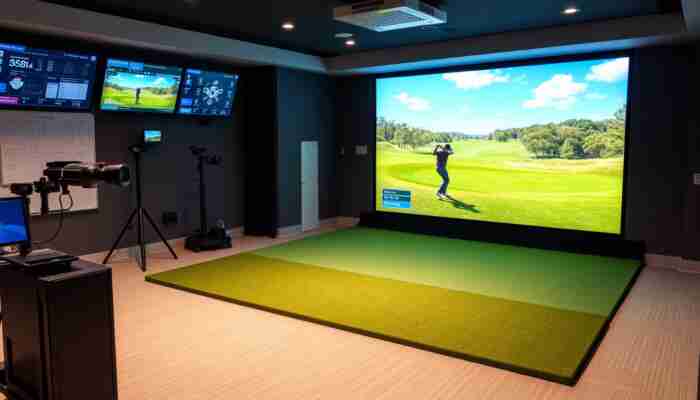
A Full Swing golf simulator is best for buyers who want a more premium simulator path and are ready to think seriously about price, room fit, setup type, and software experience. For some golfers, a Full Swing KIT launch monitor route is the smarter entry point. For others, a full simulator room makes more sense. The key is knowing which version of the Full Swing path you are actually buying into.
What People Really Mean by “Full Swing Golf Simulator”
DataForSEO makes this clear: the main keyword is not a soft informational phrase. It is a high-volume transactional query. That means users are typically close to evaluating a purchase, not just browsing general golf simulator education.
In practice, “Full Swing golf simulator” can point to two different buying paths. One is a launch-monitor-led entry via the
Full Swing KIT launch monitor.
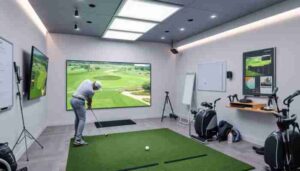
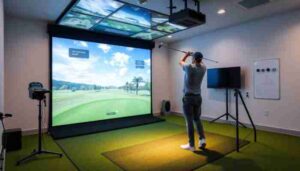
The other is a more complete simulator-room direction where room design, screen, enclosure, projector, software, and installation all become part of the decision.
Launch monitor-first path
- lower commitment than a full room
- better for buyers testing the ecosystem first
- easier to scale later
- best when flexibility matters
Full simulator-room path
- more immersive and more complete
- bigger room and budget demands
- stronger visual setup matters
- best when the room is already part of the plan
The 4 Buying Questions That Matter Most
1. Do you want the Full Swing KIT path or a full simulator room?
This is the most important question because it changes the whole project. A buyer looking at a
Full Swing practice setup
is solving a different problem than someone planning a dedicated simulator room with screen, enclosure, projector, and premium finish.
2. Does the room actually fit the system?
Search demand around room dimensions is a strong clue that buyers worry about practical fit before purchase. That is a good instinct. Ceiling height, depth, projector fit, enclosure width, and hitting position all matter more than brand appeal alone.
3. Are you comfortable with the total cost, not just the brand headline?
Price and cost are among the strongest Full Swing subqueries in DataForSEO. That means buyers are actively trying to understand whether the total investment makes sense. And they should. The true cost is usually shaped by package type, room prep, software, installation, projector, enclosure, and computer performance — not just the brand name.
4. What do you actually want from the experience?
Some buyers want premium immersion. Others mainly want reliable practice and shot feedback. If the goal is serious practice first, a launch-monitor-led setup may be the smarter buying path. If the goal is a polished room experience, the simulator-room direction matters more.
| Buying Question | Why It Matters | Typical Mistake |
|---|---|---|
| KIT vs full room | Changes cost, complexity, and room planning | Treating both as the same purchase |
| Room fit | Defines whether the setup is even practical | Falling for the brand before measuring the room |
| Total cost | Determines whether the investment is sustainable | Thinking only about the headline unit price |
| Experience goal | Keeps the system aligned with what you really need | Paying for a premium room when simpler practice was enough |
Full Swing KIT vs a Full Simulator Setup
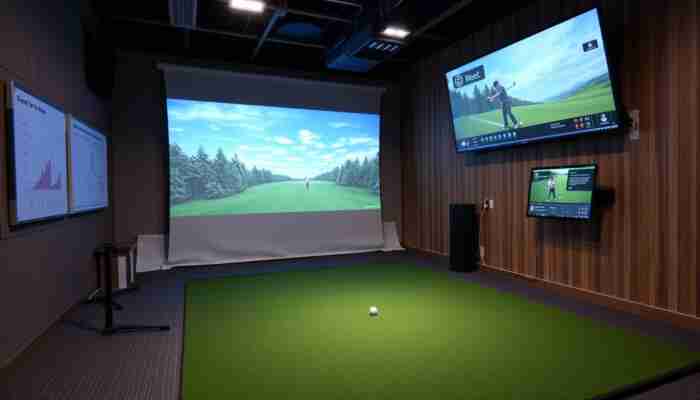
Full Swing KIT launch monitor route
This path usually fits buyers who want to enter the Full Swing ecosystem without committing immediately to a full simulator room. It is often the cleaner choice when flexibility, portability, or staged upgrades matter more than having the most polished room on day one.
If that is your direction, compare:
Full Swing KIT Launch Monitor,
Full Swing KIT Practice Package,
and
Full Swing KIT DIY Golf Simulator Package.
Full simulator-room route
This direction makes more sense when you already know you want a finished home simulator environment. In that case, you need to think beyond the brand and plan the enclosure, screen, projector, software, room dimensions, and installation as one system.
Before going that route, it often helps to review
enclosures,
simulator screens,
and
short throw projectors
before locking the room.
Price, Cost, and What Buyers Usually Underestimate
Price intent around Full Swing is too strong to ignore, and that tells us something important: buyers do not only want to know if the system is premium. They want to know whether the premium is justified.
The real cost is rarely just the branded component. It is usually shaped by the whole setup around it: package type, room preparation, software, computer performance, mounting, projector fit, and installation.
What cost usually includes in real life
The total investment may include the monitor or package itself, the simulator software, the computer, the enclosure and screen, the projector, the hitting area, room prep, and in many cases
installation services.
Room Dimensions and Setup Fit
Room fit is one of the most practical supporting intents in the Full Swing cluster. That is a strong sign that users are already thinking beyond marketing and asking whether the setup can actually work in their space.
If the room is small, shallow, or has ceiling constraints, the smarter decision is often to simplify the build rather than force a premium simulator concept into the wrong environment.
| Room Situation | Best Direction | Why |
|---|---|---|
| Limited space | KIT-first or simplified build | Keeps the project practical |
| Garage or spare room | Balanced simulator setup | Good middle ground between realism and flexibility |
| Dedicated sim room | Full simulator-room direction | Best chance to justify a premium ecosystem |
What Review-Type Queries Are Really Asking
Even though review intent is much smaller than core purchase intent, it still matters because it reveals what people hesitate about before buying. Review searches around Full Swing are usually trying to answer questions about value, accuracy, experience quality, and whether the system is worth its price point.
The best way to evaluate that is not to ask whether the brand is famous. It is to ask whether the Full Swing path matches your room, your budget, and the type of simulator experience you actually want.
Software, Courses, and the Experience Layer
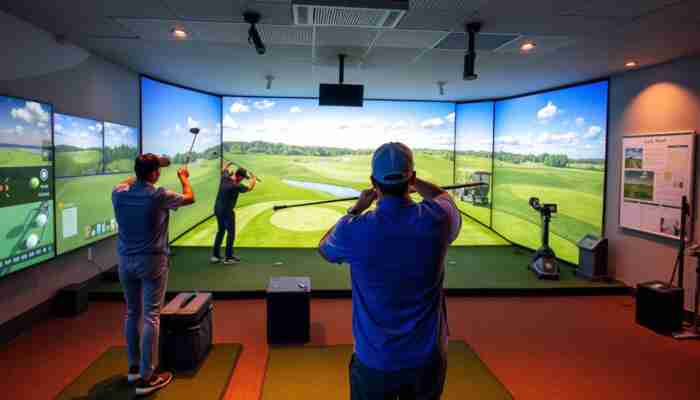
Another real subcluster in DataForSEO is courses. That tells us buyers care about what the simulator experience feels like after the purchase, not just what the hardware looks like in a product photo.
That is why the software layer matters so much. If you are buying into a premium simulator path, you should evaluate the experience stack too, not only the branded hardware.
Before making the final decision, review
golf simulator software
and
golf simulator computers
so the whole system is aligned.
Who Full Swing Is Best For
Best fit
- buyers comfortable with premium pricing
- people with enough room for a proper build
- users who want a more polished ecosystem
- buyers comparing KIT vs full simulator room seriously
- golfers who care about total experience, not only raw specs
Probably not the best fit
- buyers with tight space constraints
- users who mainly want budget-friendly practice
- people not ready for the total system cost
- buyers who have not chosen their room yet
- golfers who really only need a simpler launch monitor path
Best Next Step Based on What You Need
If you want the cleanest entry into the Full Swing ecosystem
Start with the Full Swing KIT Launch Monitor.
If you want a simpler practice-oriented setup
Compare the Full Swing KIT Practice Package first.
If you want to build toward a fuller simulator room
Review the Full Swing KIT DIY Golf Simulator Package.
If installation and room execution are your biggest concern
Review golf simulator installation services before locking the project.
FAQ
What is a Full Swing golf simulator?
In buyer terms, it usually means either a Full Swing-branded simulator path or a Full Swing KIT-based setup that may expand into a fuller indoor simulator room. The right interpretation depends on whether you are buying a monitor-led system or a complete room build.
How much does a Full Swing golf simulator cost?
The total cost depends on which Full Swing path you choose. A KIT-led setup is a different investment from a full simulator room with screen, enclosure, projector, software, and installation. That is why buyers should evaluate total system cost, not just the branded product price.
Is Full Swing worth it?
It can be, but only if the room, budget, and experience goals all support the decision. For some golfers, the Full Swing path is justified. For others, a simpler setup may deliver better value.
Do I need a full simulator room to use Full Swing?
Not always. Many buyers are better served by starting with a KIT-led route first. A full room only makes sense when the space, budget, and long-term intent are already clear.
How much room do I need for a Full Swing simulator?
That depends on whether you are building around a launch monitor path or a full simulator room. Room depth, ceiling height, enclosure width, and projector fit all matter before you commit.
What is the biggest buying mistake with Full Swing?
The biggest mistake is treating the brand as the whole answer. The better question is whether the Full Swing path matches your room, your budget, and the kind of simulator experience you actually want.
Conclusion
Full Swing is a strong commercial-intent brand topic because buyers are clearly trying to make a real purchase decision. That means the right article is not a vague brand overview. It is a practical guide that helps users decide whether the Full Swing path actually fits their room, budget, and goals.
The best next move is to decide whether you want a KIT-first path or a full simulator room, then work backward from cost, room size, software, and installation. That is how you avoid buying the wrong level of system for the wrong type of golfer.

Emma Sinclair is a passionate author and expert on indoor golf simulators, dedicated to bringing golf enthusiasts and beginners alike the latest insights and trends in this evolving field. With a background in sports technology and a love for the game, she explores how indoor simulators can enhance practice, improve skills, and create immersive experiences for players of all levels. Emma’s writing aims to bridge the gap between traditional golf and modern technology, making the game more accessible and enjoyable for everyone.

Discussion
51 Responses
It’s fascinating to see how technology has transformed the way we approach golf training. The integration of motion tracking and real-time feedback in full swing golf simulators really blurs the line between practice and actual play. I’ve personally experienced how valuable immediate performance analytics can be; it not only helps in fine-tuning specific swings but also builds muscle memory in a more engaging way.
I find it really interesting how golf simulators like the Full Swing can shape the way we practice and enjoy the game. For a beginner like me, the feedback system is invaluable—being able to analyze my swing right after taking a shot really helps me understand my mistakes. It feels like having a personal coach without the intimidation of being on a course in front of others.
I really appreciate your insights on the importance of planning and clarity when selecting a golf simulator. It’s fascinating how advanced technology has transformed our interaction with the game. As someone who’s always looking to improve my swing, the opportunity to receive immediate feedback from these simulators seems invaluable.
It’s great to hear your thoughts on this. The world of golf simulators has really opened up new ways for players to understand their game better. The immediate feedback you mentioned can be a game-changer—especially when you’re working on refining your swing.
Your insights on the importance of planning and verifying requirements before committing to a golf simulator resonate deeply, as it reflects a broader principle that can be applied across various aspects of life—especially when it comes to investing in technology. Choosing the right golf simulator is indeed a significant decision; it’s not just about selecting a product but about making a choice that aligns with one’s golfing ambitions and technology comfort level.
I really appreciate how you highlighted the importance of understanding the trade-offs and requirements before diving into a golf simulator purchase. It’s something that often gets overlooked, yet it can make such a significant difference in one’s experience. I’ve been on the fence about investing in an indoor simulator for a while, mostly because of how overwhelming the options can be.
I appreciate your insights into the world of golf simulators, especially your emphasis on the importance of trade-offs and verifying requirements before making a commitment. It’s so true that this diligence can help avoid unexpected surprises down the line.
You nailed it—trade-offs and verifying requirements are like the humble greens of golf: a little attention there can save you a lot of strokes later on. It’s all fun and games until you realize that “swing by the store” doesn’t mean a trip to the local pro shop for the top-of-the-line driver.
Your insights on the foundational steps for choosing a golf simulator are quite relevant, especially in this age when technology plays a pivotal role in enhancing sports performance. The importance of being thorough in verifying requirements before making a commitment cannot be understated. It’s all too easy to get swept up in the excitement of a purchase, only to realize later that it doesn’t meet our needs or expectations.
Your point about the thrill of making a purchase is spot on. It’s easy to get caught up in the excitement and overlook the specifics that truly matter for our individual needs. One aspect that often gets overlooked is the importance of space and setup requirements for a golf simulator. It’s necessary to consider not just the equipment, but also how it will fit into your living area, including ceiling height and distance from the screen.
Your insights on the importance of systematic decision-making before committing to a golf simulator are quite salient. Too often, we dive into purchases driven by excitement without thoroughly considering how various features will align with our specific needs, both recreationally and for practice.
Your insights on the decision-making process around golf simulators are quite compelling, particularly the emphasis on understanding trade-offs and grounding your choice in confirmed terms. It’s a reminder that with so many options available, especially in the realm of technology, clear communication and verification are essential. Have you considered how the immersive nature of simulators might affect not just gameplay but also the social aspect of golf? While they offer performance enhancements, I wonder if we risk losing some of the camaraderie that on-course play fosters. It’s an interesting balancing act between advancing our game through technology while keeping the spirit of the sport intact. What are your thoughts on this intersection? Have any readers experienced a shift in their social interactions because of these advancements?
It’s fascinating to see how technology like the Full Swing Golf Simulator can transform the way we engage with golf. The blend of motion tracking and immediate feedback creates a unique environment not just for training but for fostering a community among golfers of all levels. It reminds me of the idea that learning and improvement often flourish in a supportive and immersive context, whether on the course or in our homes.
I appreciate the detailed exploration of golf simulators and their role in enhancing the sport for both novices and experienced players. The introduction of technology into traditional sports like golf opens up fascinating avenues for engagement and improvement. Specifically, the full swing golf simulators you mention leverage advanced motion tracking technology, which I believe not only helps golfers refine their technique but also promotes a more interactive experience.
It’s great to hear your thoughts on the topic of golf simulators and their impact on the game. The integration of technology into traditional sports like golf really does open up some intriguing possibilities, doesn’t it? When it comes to full swing golf simulators, their advanced motion tracking technology offers a lens into aspects of our swings that we might not notice otherwise.
It’s interesting to see how technology is reshaping traditional sports like golf. The way full swing golf simulators integrate motion tracking really does create a unique blend of skill development and entertainment. I’ve found that these simulators not only help in perfecting swings but also provide immediate feedback, which can be incredibly beneficial for both novices trying to get a feel for the game and experienced players looking to refine specific aspects of their technique.
I found the discussion on the Full Swing Golf Simulator quite captivating, especially as someone who has been exploring ways to integrate technology into my own golf practice. The idea of using a simulator to not only replicate the real experience of swinging a club but also to gain immediate feedback is revolutionary, particularly for those of us who may not have the time or resources to practice regularly on the course.
This guide really raises some important points about navigating the world of Full Swing golf simulators. I’ve been in the market for a bit, and your mention of the different setups—like the launch monitor-led versus the more extensive simulator rooms—hit home for me. I initially thought I just needed something that could give me reliable stats, but the spatial requirements and budget implications were definitely a curveball I wasn’t quite prepared for.
It sounds like you’re really diving into the details, which is so important when it comes to something like a golf simulator. The balance between getting the right features and managing your space and budget can feel a bit overwhelming.
This is a fantastic overview of what to consider before diving into the Full Swing golf simulator world! It’s fascinating how room requirements play such a crucial role in creating that immersive experience. Last summer, I had my first session at a friend’s place with a Full Swing setup, and the spatial dynamics were definitely a factor—especially with swing mechanics and ball flight visuals.
I appreciate the comprehensive nature of your guide on Full Swing Golf Simulators. It’s clear how much thought has gone into helping potential buyers make informed decisions. I find it particularly interesting how you emphasize the importance of understanding not just the product itself but also the context in which it will be used—like the space requirements and budget constraints.
I’m glad you found the guide useful! The whole idea behind it was really to give people a broad perspective on what to look for when diving into the world of Full Swing Golf Simulators. You’ve touched on a crucial point—the context in which a simulator will be used can make all the difference.
I’m glad to hear that you appreciated the guide. It’s definitely an interesting challenge to balance the technical specs of a system with the lifestyle and environment of the buyer. The practicality of space requirements can sometimes be overlooked, but it can make all the difference in whether someone truly enjoys the simulator or feels cramped and frustrated.
You bring up an essential point about the balance between technical specs and real-world practicality. It is fascinating how often the intricacies of a system can overshadow the simple yet vital aspects of space and ambiance in a home setting. When people think about simulators, they often get caught up in things like processing power, graphics quality, and the latest features. While these are crucial elements, the environment where someone uses this setup can have a surprisingly profound impact on their enjoyment and overall experience.
Your insights into the complexities surrounding the Full Swing Golf Simulator are both thorough and thought-provoking. I completely agree that understanding the nuances of each setup—whether it be a launch monitor-led system or a complete simulator room—is crucial for anyone looking to invest. The varying costs, space requirements, and overall experience can significantly influence satisfaction post-purchase.
Your guide on the Full Swing Golf Simulator is incredibly insightful, and it prompts so many considerations that often get overlooked in the decision-making process. While it’s easy to get caught up in the excitement of acquiring new technology for our hobbies, especially something as detailed as a golf simulator, it’s important to approach the decision with a balanced perspective and realistic expectations.
This is a really practical breakdown—thank you for spelling it out! I’ve been contemplating diving into the world of Full Swing golf simulators but just didn’t know where to start. Your points about comparing different setups really hit home for me. It’s easy to get caught up in the allure of a particular brand without considering the space and budget needed.
Your guide to navigating the landscape of Full Swing Golf Simulators resonates deeply with me, especially as someone who has been considering investing in a simulator for a home setup. The emphasis on confirming terms and understanding the nuances of different setups is crucial, as the thought of making a commitment without thoroughly weighing my options feels daunting.
I get where you’re coming from; choosing the right golf simulator can feel overwhelming, but taking the time to explore your options is worth it. Beyond just the terms, think about how you’ll use it—will it be just for practice, or are you aiming for family fun or friendly competitions?
Your post on the Full Swing Golf Simulator is incredibly well-detailed and offers a solid foundation for anyone considering this investment. The emphasis on understanding the various setups—whether it’s a launch monitor-led configuration or a more comprehensive simulator room—really highlights the importance of aligning one’s needs with the product’s specifications.
I’m glad you found the post on the Full Swing Golf Simulator to be thorough. It’s interesting how crucial it is to really dive into the different setups before making a decision. I’ve noticed that many people tend to jump at the latest tech without fully considering how it fits into their space or their playing style.
This guide brings up some valuable points that potential buyers need to consider before investing in a Full Swing golf simulator. I’ve seen firsthand how easy it is for someone to get swept up in the allure of a brand without fully understanding the specifics of what they’re purchasing. It’s not just about the name; the nuances between a launch monitor-led setup and a more comprehensive simulator room can have a significant impact on the user’s experience.
It’s interesting to see how the Full Swing Golf Simulator is becoming more popular among both avid golfers and casual players. In my experience, understanding the differences in setups—like the launch monitor-led versus complete simulator rooms—has been crucial in making an informed choice. A friend of mine invested in a Full Swing KIT for his smaller space and has really enjoyed the versatility it offers without the need for a substantial room.
Your insights on the factors that influence the decision to invest in a Full Swing Golf Simulator are certainly thought-provoking. The emphasis on understanding the differences between various setups—such as the launch monitor-led configurations or the comprehensive simulator rooms—is crucial. Personally, I have found that many potential buyers often overlook the specific space requirements and the technological compatibility with existing equipment when making their decisions.
I appreciate the breakdown in your guide! It’s like the golf version of “choose your own adventure,” but instead of battling dragons, you’re navigating launch monitors and room dimensions.
I’m glad you enjoyed the guide! The idea of approaching it like a “choose your own adventure” is spot on—it really is all about finding the best setup for your own game.
Ah, the elusive Full Swing Golf Simulator – it’s like a mystical creature lurking in the shadows of my living room! I’ve thought about getting one, but then I picture my cat using the launch monitor as a new napping spot instead of a golf monitor. You’re right, it’s essential to know if I’m just investing in the “cool factor” or if my slice will actually improve. I’ve spent more time analyzing my swing at the driving range than I did preparing for final exams, so maybe it’s the technology I really need… or just some lessons without the cat!
I appreciate your insights on navigating the choices surrounding Full Swing golf simulators. It’s so true that understanding the space and setup requirements is crucial; I’ve seen friends dive into buying a simulator without really assessing their room dimensions or their specific golfing needs, only to face disappointment later.
Great points in the blog post! It’s true: when diving into the world of golf simulators, it’s not just about the brand name flashing on the screen. I mean, I’ve seen people get swept up in the allure of a shiny name and then realize they have more of an indoor closet than an indoor golf course to work with. I can already picture the scene: “Honey, I swear this Full Swing KIT can fit into our living room. We just need to move a few things…” Cue awkward maneuvering of the beloved antique coffee table and futile attempts to explain that ‘pocketing’ a few golf clubs isn’t the same as decluttering.
You’ve captured a key aspect of the golf simulator craze that’s often overlooked. It’s easy to get caught up in the fancy branding and the idea of having a high-tech setup at home, but the reality of available space is a different ballgame. This is where practicality often clashes with aspiration.
Your insights on the Full Swing Golf Simulator raise valuable points, especially regarding the need for potential buyers to approach their decision thoughtfully rather than being swayed solely by the brand name. The intricacies of choosing the right setup based on individual needs and circumstances highlight a critical aspect of not just golf simulation but the broader technology market as well.
This guide on Full Swing Golf Simulators raises some critical points about what potential buyers should consider before making a commitment. I particularly appreciate the emphasis on understanding the different configurations, from launch monitor-led setups to the more immersive complete simulator rooms. This distinction is vital, as it can significantly impact both the user experience and the overall cost.
You’ve touched on some essential considerations when evaluating a Full Swing golf simulator, especially regarding the varying setups and the necessary space. It’s interesting to think about how the rise of home simulators can change the way we interact with the sport itself. For example, my brother invested in a high-end setup during the pandemic, and while he loved the convenience, it did lead to him relying solely on it for practice.
This guide on Full Swing Golf Simulators raises some intriguing points, particularly regarding the complexities of choosing the right setup based on individual needs. It’s clear that potential buyers are not merely looking for brand prestige but are increasingly focused on functionality and value for money.
Your insights on the Full Swing Golf Simulator are quite comprehensive, particularly in highlighting the various factors a potential buyer should consider before making a commitment. One point that stands out is the necessity of thoroughly understanding the different options available, such as the distinction between a launch monitor-led setup and a more robust simulator room.
This is a solid breakdown of what to consider before diving into a Full Swing golf simulator. I appreciate the emphasis on doing your homework—a thorough understanding of your space and budget really does make all the difference. For instance, I almost jumped into a top-tier simulator setup without considering the room size and layout in my garage. Turns out, I would’ve had to rearrange my entire workshop!
Your insights on the Full Swing Golf Simulator illustrate the complexity behind making an informed purchase. It’s interesting how the conversation often shifts from brand reputation to the specific needs of the user. For instance, while some may prioritize a high-end simulator setup for serious practice, others might just want a more budget-friendly option to enjoy casual play at home.
It’s fascinating how golf simulators like Full Swing have become essential tools not just for avid players but also for those of us looking to improve our game from the comfort of home. The distinction between a launch monitor-led setup and a complete simulator room really resonates—it seems like a decision that revolves around not just budget but overall commitment to the sport.
This is a great overview of the Full Swing golf simulator landscape! The way you’ve highlighted the importance of understanding the various setups really hit home—I mean, choosing between a basic launch monitor and a full simulator room can feel a bit like being a kid in a candy store with a limited allowance. You think you’re going for that shiny chocolate bar, but suddenly you’re swept away by the allure of the jaw-dropping jawbreaker!
This guide on Full Swing Golf Simulators touches on some crucial points that resonate with me as both a golf enthusiast and someone who’s explored various simulator options. The differentiation between a launch monitor-led setup and a complete simulator room is particularly important. I’ve learned through my own experience that not all setups deliver the same level of engagement or realism, and the context of your space can make or break your overall experience.
It’s refreshing to see such a nuanced approach to evaluating golf simulators, especially when it comes to something as significant as a Full Swing setup. You raise a crucial point about the importance of understanding the different configurations available—there’s certainly a world of difference between opting for a simpler launch monitor setup versus a more integrated simulator room.