
Table of Contents
- What a Golf Simulator Enclosure Actually Does
- The 6 Things That Matter Most When Choosing an Enclosure
- What Size Enclosure Makes Sense for a Home Setup?
- Enclosure Kit, Package, or Brand-Specific Option?
- Common Enclosure Mistakes That Hurt the Whole Setup
- Best Next Step Based on Your Home Setup Goal
- FAQ
- Conclusion
Home Golf Enclosure Guide
Golf Simulator Enclosure: How to Choose the Right Home Setup
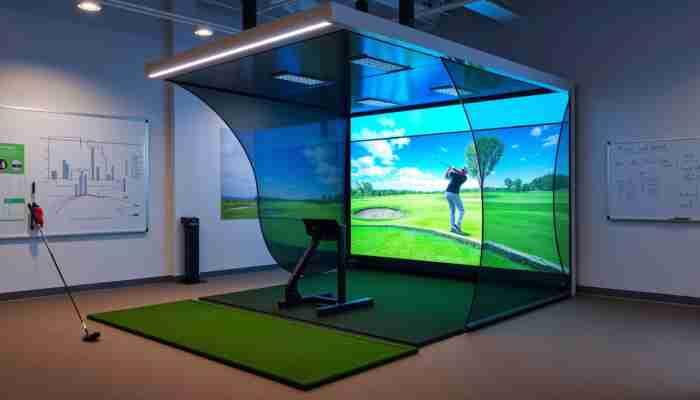
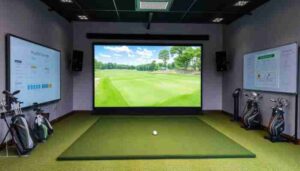
A golf simulator enclosure is one of the most important parts of a home simulator room because it shapes safety, visual quality, room fit, and how finished the whole setup feels. A launch monitor may provide the data, but the enclosure is what turns the room into a usable simulator environment.
The right enclosure is not simply the biggest one or the most expensive one. The right enclosure is the one that fits your room properly, works with your screen and projector setup, protects the surrounding space, and feels reliable enough for regular use.
If you are comparing the commercial options first, start with golf simulator enclosures, enclosure packages, simulator screens, and projectors before finalizing the room.
Quick answer
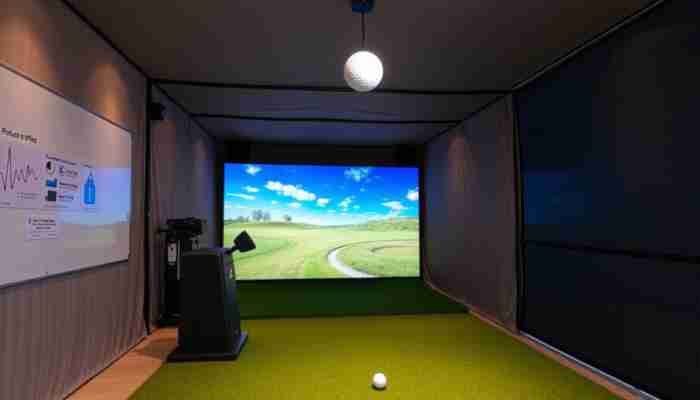
The best golf simulator enclosure for home use is one that matches your room dimensions, safety needs, screen size, projector setup, and long-term practice goals. A strong enclosure should feel stable, protect the room well, pair cleanly with the impact screen, and leave enough space for comfortable swings.
What a Golf Simulator Enclosure Actually Does
An enclosure is not just a frame around a screen. It creates the hitting environment. It helps control rebound, protects walls and nearby surfaces, improves immersion, and gives the simulator room a defined structure.
In practical terms, a better enclosure makes the setup feel safer and more complete. A weak enclosure often creates the opposite effect: more noise, more room exposure, weaker visual finish, and less confidence during full swings.
A good enclosure usually improves…
- room protection
- screen presentation
- swing confidence
- overall room finish
- long-term durability of the setup
A weak enclosure often creates…
- exposed room surfaces
- poorer impact control
- less believable visuals
- a room that feels unfinished
- more setup compromises later
The 6 Things That Matter Most When Choosing an Enclosure
1. Room fit
The first decision is not brand. It is room size. Width, height, depth, and usable swing clearance all matter before you decide what enclosure type actually makes sense.
2. Screen compatibility
The enclosure and impact screen need to work as one system. If the fit is poor, the simulator loses both safety and visual quality. That is why simulator screens should be considered at the same time as the enclosure, not afterward.
3. Frame strength and material quality
A home setup should feel stable enough for repeated use. Frame design, material quality, and overall build strength all shape whether the enclosure feels dependable over time or starts to feel like a weak point in the room.
4. Safety and ball containment
A proper enclosure should reduce risk, not just decorate the room. Side protection, structure stability, and the ability to manage mis-hits all matter. In some rooms, adding barrier netting or extra side protection can make the setup much safer.
5. Projector and image logic
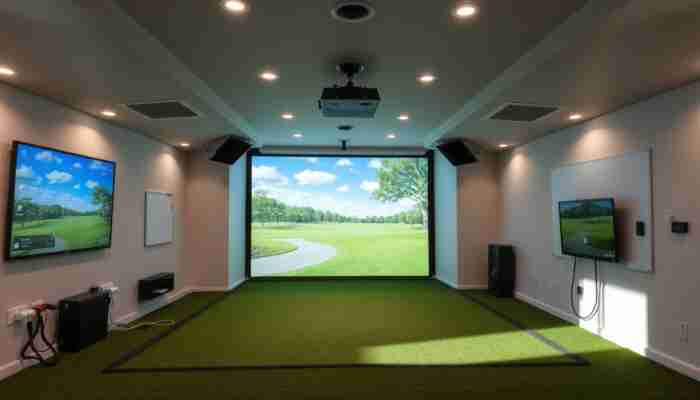
A good enclosure should leave room for a clean projector relationship. The screen size, enclosure depth, and projector path all need to work together. That is why many setups should be planned alongside short throw projectors and projector mounts.
6. Upgrade path
The enclosure should not trap the whole setup. A smarter choice leaves room to improve the screen, software, projector, or launch monitor later without forcing a complete rebuild.
| Decision area | Why it matters | Common mistake |
|---|---|---|
| Room fit | Defines what can safely work | Choosing product first, room second |
| Screen pairing | Shapes visuals and impact control | Treating screen as a separate afterthought |
| Frame quality | Affects durability and stability | Underestimating repeated-use stress |
| Safety | Protects room and users | Assuming the main screen solves everything |
| Projector fit | Keeps visuals believable | Ignoring screen-projector relationship |
| Upgrade path | Protects long-term value | Buying a dead-end setup |
What Size Enclosure Makes Sense for a Home Setup?
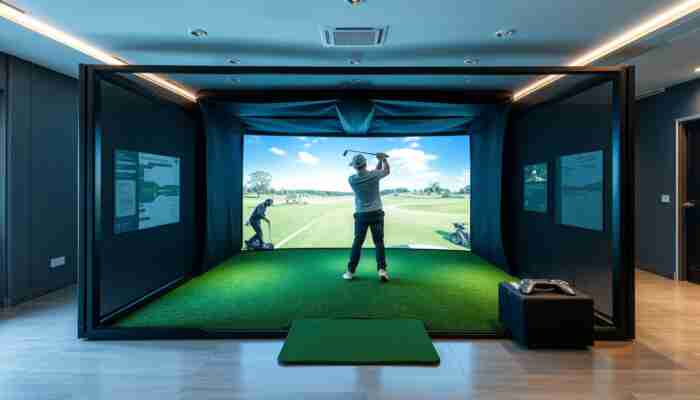
The best enclosure size is the one that leaves enough room for safe swings, realistic visuals, and clean room flow. Bigger is not always better if it creates mounting problems, ceiling issues, or awkward spacing.
Smaller rooms often do better with a cleaner, more disciplined setup that uses the space efficiently. Larger rooms can justify bigger enclosure formats and more immersive visuals, but they still need correct screen and projector logic.
| Room situation | Better enclosure direction | Why |
|---|---|---|
| Smaller home room | Tighter, cleaner enclosure fit | Preserves swing space and room balance |
| Garage or flexible room | Balanced enclosure setup | Best mix of safety, visuals, and practicality |
| Dedicated simulator room | Larger enclosure or package path | Supports stronger immersion and more finished design |
Enclosure Kit, Package, or Brand-Specific Option?
This depends on how much you already know about the room and how much control you want over the setup. Some buyers want a straightforward path with fewer compatibility decisions. Others want to choose each part more selectively.
Choose a package or structured path when…
- you want fewer compatibility risks
- you want a cleaner buying process
- you already know the room can support it
- you prefer simplicity over deep customization
Choose a more selective route when…
- you know the room well
- you want tighter budget control
- you want a specific screen or projector relationship
- you plan to improve the room in stages
Good next comparisons here are: enclosure packages, Carl’s Place enclosures, and Rain or Shine enclosures.
Common Enclosure Mistakes That Hurt the Whole Setup
Best Next Step Based on Your Home Setup Goal
FAQ
What is the best golf simulator enclosure for home use?
The best enclosure is the one that fits your room correctly, works with your screen and projector plan, and gives you enough safety and stability for regular use. For most buyers, fit matters more than chasing the biggest or most expensive option.
Do I need an enclosure for a home golf simulator?
In many cases, yes. An enclosure improves protection, screen presentation, safety, and the overall feeling of the simulator room. It is often what makes the setup feel complete instead of temporary.
How do I choose the right enclosure size?
Start with the room, not the product. Measure width, height, depth, and safe swing clearance first. Then choose the enclosure size that supports those limits without forcing the room into a bad layout.
Should I buy an enclosure package or build it piece by piece?
A package is usually better when you want a simpler path and fewer compatibility decisions. A more selective build is better when you already know the room and want more control over budget and configuration.
What is the biggest enclosure mistake people make?
The biggest mistake is choosing the enclosure before understanding the room, the screen, and the overall simulator layout. That usually creates problems that are expensive and frustrating to fix later.
Can an enclosure improve the simulator experience even if the launch monitor is already good?
Yes. A better enclosure improves the room’s usability, protection, visual finish, and confidence during swings. It helps the simulator feel more complete and more believable overall.
Conclusion
A golf simulator enclosure is not just another accessory. It is one of the central pieces that determines whether a home simulator room feels safe, realistic, and worth using regularly.
The smartest way to choose one is to stop thinking only about product names and start thinking about the room as a system. Once the enclosure, screen, projector, and room dimensions all support each other, the whole setup becomes easier to trust and easier to enjoy long term.

Ethan Reynolds is a passionate writer and enthusiast in the world of indoor golf simulators. With a keen eye for technology and a deep understanding of golf dynamics, he explores the intersection of sports performance and innovative simulation tools. Through his engaging articles, Ethan provides valuable insights and tips for golfers at all levels, helping them enhance their game while enjoying the convenience of home-based training.
Discussion
19 Responses
I really appreciate the thorough breakdown of how crucial the golf simulator enclosure is to creating an effective home setup! It’s interesting how much thought goes into not just the technology itself, but also the environment you’re creating around it. I’ve learned from my own attempts at setting up a home simulator that the enclosure is often overlooked compared to the gadgets like the launch monitor or the high-tech projector. But after a few rounds, it quickly became apparent that the enclosure is key to enhancing the entire experience.
You’re absolutely right about the significance of the golf simulator enclosure; it’s fascinating how much it can elevate the entire experience. I think many people step into the world of home simulators with a laser focus on cutting-edge technology—the latest launch monitor, the highest resolution projector—all the bells and whistles that sound great on paper. But as you’ve pointed out, it’s often the enclosure that silently does the heavy lifting behind the scenes.
It’s great to hear you found the article helpful! You’re spot on about the enclosure being a crucial part of the setup. When I was first diving into the world of home golf simulators, I made some similar discoveries. At first glance, all the shiny gadgets—launch monitors, projectors, and screens—seem to steal the show. But as you’ve pointed out from your experience, the enclosure plays a role that’s hard to ignore.
Thank you for sharing your thoughts! If you’re interested in elevating your own home setup, check out this guide to choosing the perfect golf simulator enclosure—it could make all the difference!
https://golfsimplanet.com/ForesightSportsQuadMAXLaunchMonitor
This guide really highlights the often-overlooked aspects of setting up a home golf simulator, particularly the importance of choosing the right enclosure. It’s true that while the launch monitor is vital for data, the enclosure plays a crucial role in transforming a simple room into an immersive golf experience. I’ve seen too many setups that fell short because the enclosure didn’t match the room size or the screen dimensions, leading to frustrations during use.
This is a fantastic exploration of what can often feel like a daunting purchase! It’s so true that the right golf simulator enclosure is about more than just the height or price tag—it’s about creating that perfect oasis where you can genuinely escape from reality (even if just for a few slices… or is it hooks?).
Creating that perfect oasis is so true, especially when it comes to unwinding with a good round of golf, even if it’s just in the comfort of our own home. It’s interesting how a well-chosen simulator enclosure can really transform your environment; it’s like stepping into your own little golf paradise.
I really appreciate your insights about finding the right golf simulator enclosure—it’s such a personal journey for everyone, isn’t it? The experience of stepping into your own little golf sanctuary is something special. It’s not just about the measurements on paper or the price tag staring back at you; it’s about how that space makes you feel when you step inside.
“Glad you enjoyed the article! If you’re ready to transform your space into that golf sanctuary, check out some great options here!”
https://golfsimplanet.com/GTRAKWallMountKit
This is a crucial topic for anyone considering a home golf setup. I’ve found that the enclosure truly makes or breaks the experience. When I first set up my own simulator, I focused mainly on the tech—launch monitor, screen, and projector—while somewhat neglecting the enclosure. It wasn’t until I experienced several errant shots hitting the walls that I realized how essential a properly fitting enclosure is for safety and immersion in the game.
I really appreciate how you’ve highlighted the significance of the golf simulator enclosure in creating a safe and functional environment for playing golf at home. It’s fascinating to think about how much the right enclosure contributes not just to the practicality of a simulator, but also to the overall experience of using it.
You’ve touched on such an interesting aspect of golf simulation. The enclosure really does play a crucial role in shaping not just the practicality of the experience but also the atmosphere. It can be the difference between a sterile session and a genuinely immersive practice.
Choosing the right golf simulator enclosure can indeed set the tone for the entire experience. In my own setup, I found that the enclosure not only improved the aesthetics of the room but also made a huge difference in how immersive the simulation feels. I went for a mid-range option that perfectly fits my space; it offers a clear visual without breaking the bank.
You make some excellent points about choosing the right golf simulator enclosure! It’s true that while the hardware (read: the tech toys) tends to steal the spotlight, the enclosure is the quiet hero of the home golf experience. I mean, without it, we’d be risking more than just our pride with a rogue golf ball veering off course—how many of us want to replace a flat-screen TV because we were chasing that perfect swing?
Your guide underscores an often-overlooked aspect of golf simulator setups—the importance of the enclosure in creating a safe and immersive environment. I’ve found that many enthusiasts tend to prioritize the tech—launch monitors, software, and high-definition projectors—while neglecting the enclosure’s role in the entire experience. It’s fascinating how the right enclosure not only enhances safety but also contributes to the aesthetic and realistic feel of the session.
It’s interesting to see how choosing the right golf simulator enclosure can significantly impact the overall experience. I recently set up a home simulator, and I found that prioritizing the enclosure’s fit and safety really transformed the space. Initially, I was tempted to go for a larger, pricier option, but after much consideration, I opted for one that perfectly suited my room size and layout.
What a thorough and insightful guide on golf simulator enclosures! It’s true, everyone seems to focus on the shiny launch monitors and high-definition projectors, but without a solid enclosure, you might as well be playing golf in the middle of a crowded coffee shop—imagine the chaos!
Your insights about the importance of a golf simulator enclosure in creating a well-rounded home golfing experience resonate strongly with me. The enclosure definitely plays a critical role in shaping not only the functionality of the space but also the overall enjoyment of the game. It strikes me that many people might overlook the significance of the enclosure due to the allure of high-tech equipment like launch monitors or projectors, but as you pointed out, it’s truly the enclosure that provides the necessary context and safety for the entire setup.
This guide is really helpful for anyone looking to set up a home golf simulator! I never realized how much the enclosure contributes to the overall experience—it’s like creating your own little world that simulates being on the course. It’s interesting how the right fit can impact not just safety, but also the immersive quality of the simulation.
I totally agree that the enclosure plays such a vital role in creating a successful home golf setup. I’ve had my simulator for a while now, and when I first installed it, I went for a really big enclosure thinking size was the main factor. It turned out to be a bit overwhelming in my small room! After some trial and error, I found that a snug fit with my screen actually made the experience feel more immersive.
It’s interesting how often the enclosure gets overlooked in the excitement of setting up a golf simulator. I remember when I first put mine together; I chose the biggest one thinking it would automatically be the best fit for my space. But after a few sessions, I realized that it wasn’t about size—rather, how well it combined with my projector and screen.