- Home
- Rangefinders
Rangefinders
A golf rangefinder — also called a golf distance meter, golf laser rangefinder, or golf GPS device — measures the distance from your current position to the flag, front of green, back of green, and course hazards, replacing yardage estimation with verified distances that directly improve club selection. GolfSimPlanet carries rangefinders from three brands: Garmin (Approach Z82, Approach Z30 — laser rangefinders with integrated GPS and 41,000+ preloaded course maps), Voice Caddie (SL3 hybrid GPS/laser, L6 laser with slope, TL1 laser with slope, VC4 GPS voice, VC300SE GPS voice), and SkyCaddie (SX400, PRO 5X — GPS rangefinders with ground-verified course maps and IntelliGreen technology). Products span three rangefinder types: laser rangefinders (point-and-shoot pin distance to ±1 yard accuracy, up to 400–450 yards range), GPS rangefinders (front/center/back green distances plus hazard yardages on 35,000–41,000 preloaded courses without line-of-sight to the flag), and hybrid GPS/laser rangefinders (Voice Caddie SL3 — combines both technologies in one device). Slope-enabled models calculate plays-like distance adjusted for elevation change; all slope models include tournament mode that disables slope for competition-legal use. Browse all models below or use the brand and type filters to narrow your selection.
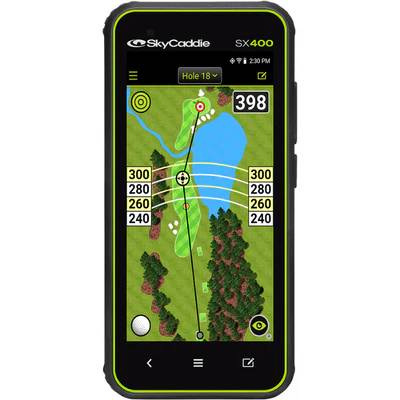
SkyCaddie SX400
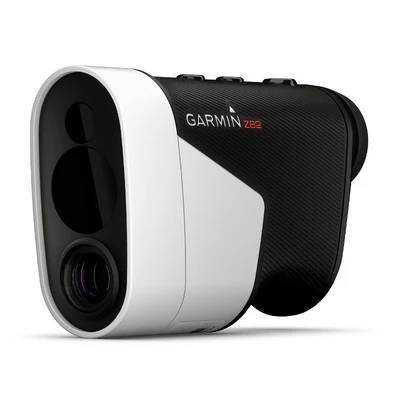
Garmin Approach Z82 Golf Laser Rangefinder with GPS
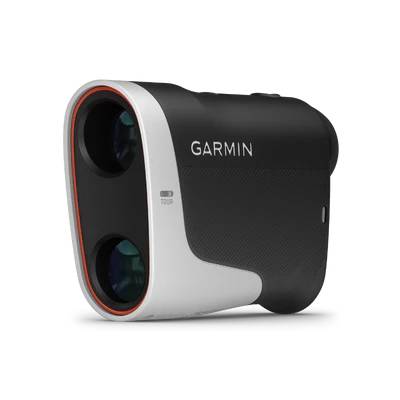
Garmin Approach Z30 Golf Laser Range Finder
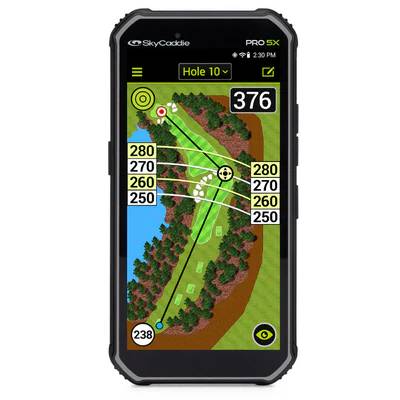
SkyCaddie PRO 5X
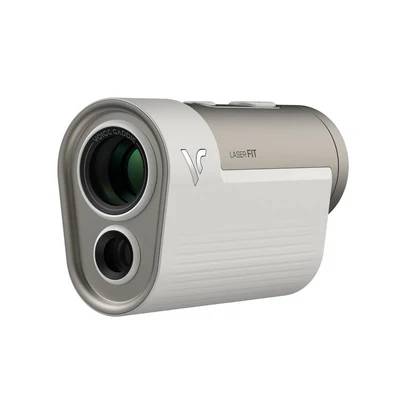
Voice Caddie Laser FIT Rangefinder
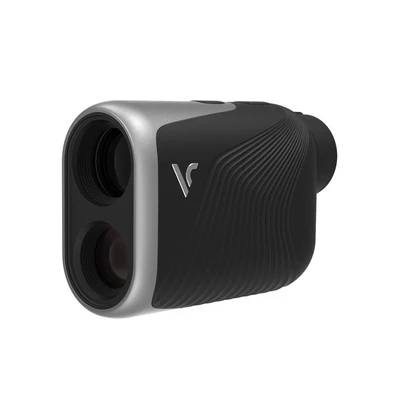
Voice Caddie L6 Golf Laser Rangefinder With Slope
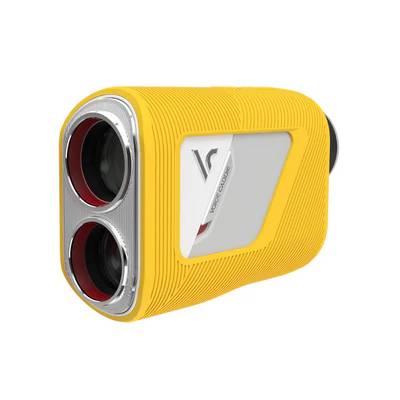
Voice Caddie TL1 Laser Rangefinder with Slope
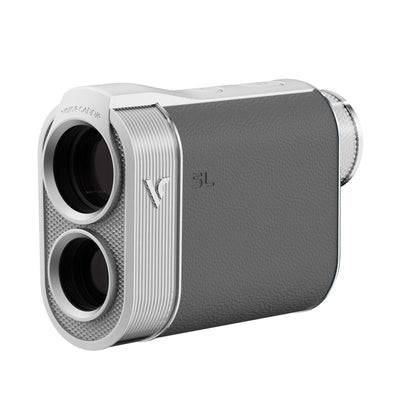
Voice Caddie SL3 Hybrid GPS Laser Rangefinder
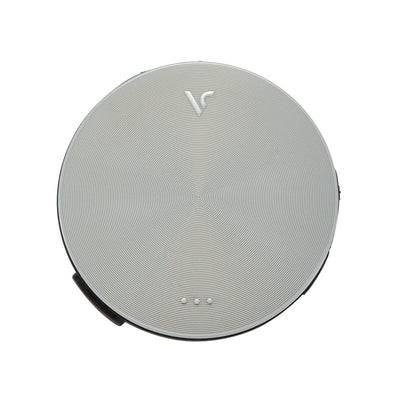
Voice Caddie VC4 Voice Golf GPS Rangefinder
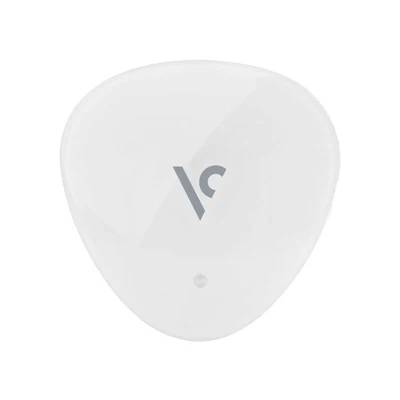
Laser vs. GPS vs. Hybrid Rangefinders — Which Type Is Right for You?
Three rangefinder technologies are available at GolfSimPlanet, each with distinct advantages for different playing styles and course conditions. Understanding the difference between them is the most important factor in choosing the right device.
Laser Rangefinders
Laser rangefinders emit an invisible laser beam that bounces off the target and returns a distance reading to ±1 yard accuracy (Garmin Z82: ±10 inches / 25 cm). They require line-of-sight to the target — you aim at the flag or a specific hazard and get a single precise reading. Range typically 400–450 yards. Best for players who want exact pin distance on any course without preloading course data. Models at GolfSimPlanet: Garmin Approach Z30, Garmin Approach Z82, Voice Caddie L6 (with slope), Voice Caddie TL1 (with slope).
GPS Rangefinders
GPS rangefinders use satellite positioning and preloaded course maps to display front, center, and back-of-green distances plus hazard yardages simultaneously — without requiring line-of-sight to the flag. SkyCaddie models use ground-verified course maps (teams physically walk each course to record sub-meter data points) covering 35,000+ courses. Garmin models include 41,000+ preloaded courses with 2D CourseView mapping. Best for players who want hazard layup distances and full hole overviews alongside green yardages. Models at GolfSimPlanet: SkyCaddie SX400 (4-inch HD touchscreen, IntelliGreen, 40 targets per hole), SkyCaddie PRO 5X, Voice Caddie VC4 (voice readout GPS), Voice Caddie VC300SE (voice readout GPS).
Hybrid GPS/Laser Rangefinders
Hybrid rangefinders combine GPS course mapping with laser pin-finding in a single device — eliminating the need to carry both. The Voice Caddie SL3 is the only device in our catalog (and one of very few on the market) to integrate fully active hybrid GPS with laser in one unit — delivering GPS Pin Assist (uses GPS course data to filter out background objects and improve pin-lock speed), slope compensation with tournament mode, Putt View (elevation and distance data for green reading), OLED color touchscreen, ±1 yard laser accuracy, and 20-hour battery life in GPS mode. The Garmin Approach Z82 combines 6x image-stabilized laser (450 yards, ±10 inches) with integrated GPS and 2D CourseView overlay that displays the laser range arc on the course map in the viewfinder — plus PlaysLike Distance with live wind data from nearby weather stations.
Golf Rangefinder Specs — Model Comparison
Key specs to compare across rangefinder models: type (laser/GPS/hybrid), accuracy, range, slope function, tournament mode, course database, and battery life.
| Model | Type | Accuracy / Range | Slope | Courses | Best For |
|---|---|---|---|---|---|
| Garmin Approach Z82 | Laser + GPS | ±10″ · 450 yards · 6x stabilized | Yes + wind · tournament mode | 41,000+ | Premium all-in-one, wind-adjusted plays-like distance |
| Garmin Approach Z30 | Laser + GPS | ±1 yard · 400 yards | Yes · tournament mode | 41,000+ | Mid-range laser + GPS, reliable daily use |
| Voice Caddie SL3 | Hybrid GPS/Laser | ±1 yard · OLED display | Yes · tournament mode | GPS Pin Assist | Most advanced hybrid, Putt View, green undulation data |
| Voice Caddie L6 | Laser | ±1 yard | Yes · tournament mode | — | Mid-range laser with slope, no GPS needed |
| Voice Caddie TL1 | Laser | ±1 yard | Yes · tournament mode | — | Budget laser with slope, entry-level |
| Voice Caddie VC4 | GPS (voice) | GPS front/center/back | No | 40,000+ | Hands-free GPS voice readout, clip-on wearable |
| Voice Caddie VC300SE | GPS (voice) | GPS front/center/back | No | 40,000+ | Budget GPS voice, no phone required |
| SkyCaddie SX400 | GPS | Sub-meter GPS · 40 targets/hole | No | 35,000+ ground-verified | 4″ HD touchscreen, IntelliGreen, best GPS mapping |
| SkyCaddie PRO 5X | GPS | Sub-meter GPS | No | 35,000+ ground-verified | Premium GPS, immersive hole view, advanced mapping |
How to Choose a Golf Rangefinder — 4 Key Decisions
1. Laser vs. GPS — Which Suits Your Game?
Choose laser if you play a variety of courses and primarily want exact pin distance on any hole — laser works on any course, anywhere, with no preloaded data required. Choose GPS if you regularly play a small number of known courses and want hazard distances, layup yardages, and green front/back without needing line-of-sight to the flag. Choose hybrid (Garmin Z82 or Voice Caddie SL3) if you want both capabilities in one device.
2. Do You Need Slope?
Slope-enabled rangefinders calculate plays-like distance — adjusting raw yardage for elevation change between your position and the target. A 150-yard uphill shot to a green 30 feet above you plays like 160 yards; slope gives you that adjusted number automatically. All slope models at GolfSimPlanet include tournament mode — a switch or button that disables slope output for competition rounds where slope-adjusted devices are prohibited under USGA and R&A rules.
3. Course Database Quality
SkyCaddie’s ground-verified course maps — created by teams physically walking each course to record sub-meter data points — are the gold standard for GPS accuracy, covering 35,000+ courses. Garmin’s 41,000+ course database uses satellite-derived data, which covers more courses globally but with slightly less precision on hazard placement. Voice Caddie GPS models cover 40,000+ courses via satellite mapping. If course accuracy on US courses is the priority, SkyCaddie’s ground-verified data is unmatched.
4. Tournament Legal Use
Under USGA Rule 4.3, distance-measuring devices are permitted in competition when the Local Rule allowing them is in effect — but slope-adjusted distances are not permitted. All slope-enabled rangefinders at GolfSimPlanet include tournament mode that disables slope output. The Garmin Approach Z82 features an external tournament mode indicator light visible to playing partners, confirming the device is competition-legal without requiring manual inspection.
Why Buy Golf Rangefinders from GolfSimPlanet?
GolfSimPlanet carries rangefinders from Garmin, Voice Caddie, and SkyCaddie — three brands that dominate the US golf rangefinder market with verified accuracy ratings, tournament-legal slope modes, and course databases covering 35,000–41,000 courses. Every model in our catalog has been selected for accuracy (±1 yard minimum), build quality for year-round on-course use, and battery life sufficient for 18+ holes per charge. Our Scottsdale, AZ team has hands-on experience with every rangefinder brand in our range and can advise on the right model for your playing style, handicap, and typical course conditions — whether you need a standalone laser for tournament play, a GPS device for hazard management, or the Garmin Approach Z82 or Voice Caddie SL3 for a full hybrid solution that replaces both. Rangefinders pair naturally with the launch monitor and simulator software data from your indoor sessions — reinforcing on-course distance calibration with the same yardage precision you practice with indoors.
Golf Rangefinder FAQ
What is the difference between a laser rangefinder and a GPS rangefinder?
A laser rangefinder uses an emitted laser beam to measure the exact distance to a specific target — flag, tree, bunker face — with ±1 yard or better accuracy at up to 400–450 yards. It requires line-of-sight to the target and works on any course with no preloaded data. A GPS rangefinder uses satellite positioning and preloaded course maps to display distances to the front, center, and back of the green plus hazard yardages simultaneously — without needing to aim at the flag. GPS devices work through trees and blind shots where laser line-of-sight is blocked. Hybrid devices like the Garmin Approach Z82 and Voice Caddie SL3 combine both technologies.
Are slope rangefinders legal in tournament play?
Slope-adjusted distance output is not permitted in any USGA or R&A governed competition. However, all slope-enabled rangefinders at GolfSimPlanet include a tournament mode that disables slope output — making the device legal for competition use when tournament mode is active. The Garmin Approach Z82 includes an external indicator light that shows playing partners and officials the device is in tournament mode, eliminating any ambiguity about legality during a round.
What makes SkyCaddie course maps better than other GPS rangefinders?
SkyCaddie employs field mapping teams who physically walk each course and record thousands of data points at sub-meter precision — including hazard edges, carry distances, and green perimeters that satellite imagery cannot resolve accurately. This ground-verified approach covers 35,000+ courses and produces IntelliGreen maps that automatically rotate to show the green from your approach angle, displaying accurate front carry, center, back, and depth-of-green distances from any fairway position. Satellite-based GPS databases (Garmin, Voice Caddie) cover more courses globally but cannot match SkyCaddie’s per-course data density on US courses.
What is the Garmin Approach Z82’s PlaysLike Distance with wind?
The Garmin Approach Z82 is the only rangefinder in our catalog that factors live wind data into its plays-like distance calculation. It connects to the nearest official weather station (typically an airport METAR) via the Garmin Golf app to retrieve current wind speed and direction at your location, then adjusts the plays-like distance upward (headwind) or downward (tailwind) accordingly. A 150-yard shot into a 15 mph headwind might play like 163 yards; the Z82 calculates and displays that number directly in the viewfinder alongside the laser arc on the 2D CourseView map — a level of on-course decision data previously available only on GPS units costing significantly more.
Key Features of Our Rangefinders
Golf Rangefinders — Key Specs & Selection Criteria
Four attributes determine which rangefinder delivers accurate, actionable distance data on the course: measurement technology (laser vs. GPS vs. hybrid), accuracy rating, slope compensation, and course database quality. A rangefinder that excels in one area but fails in another — high laser accuracy but no tournament mode, or a GPS database that doesn’t cover your home course — creates gaps in on-course decision making that no other device can compensate for.
Measurement Accuracy & Range
All laser rangefinders at GolfSimPlanet deliver ±1 yard accuracy at distances up to 400–450 yards. The Garmin Approach Z82 achieves ±10 inches (25 cm) accuracy with 6x image-stabilized optics — the tightest laser accuracy in our catalog — at up to 450 yards. The Voice Caddie SL3 and L6 deliver ±1 yard at up to 400 yards. SkyCaddie GPS models (SX400, PRO 5X) use sub-meter GPS positioning with ground-verified course data — not satellite-estimated coordinates — for front/center/back green distances and 40 individual hazard targets per hole. Accuracy on laser models is unaffected by course coverage; GPS accuracy depends directly on the quality of the course map database.
Target Acquisition & Pin-Lock Speed
Pin-lock speed — the time between triggering the laser and receiving a confirmed flag distance — varies significantly between models. The Garmin Approach Z82 uses PinFinder technology to separate the flag distance from background objects (trees, spectator areas, slopes behind the green) using GPS course data to filter the laser return, not just signal strength. The Voice Caddie SL3 uses GPS Pin Assist — cross-referencing GPS flag position data with laser return to confirm pin lock even when background objects are at similar distances. Entry-level laser models (Voice Caddie TL1) use amplitude-based pin-lock only, which is reliable in open conditions but less consistent against wooded backgrounds.
Slope Compensation & Tournament Mode
Slope-enabled rangefinders calculate plays-like distance — adjusting raw yardage for elevation change between your position and the target. A 150-yard uphill shot to a green 30 feet above your ball position plays like 160 yards; slope delivers that adjusted number directly. All slope models at GolfSimPlanet — Garmin Z82, Z30, Voice Caddie SL3, L6, TL1 — include tournament mode that disables slope output for competition-legal use under USGA Rule 4.3. The Garmin Approach Z82 goes further: it factors live wind data from nearby weather stations into its PlaysLike Distance calculation, adjusting for headwind and tailwind in addition to elevation — the only model in our catalog with this capability.
Build Quality, Optics & Battery Life
All laser rangefinders at GolfSimPlanet are rated IPX7 weatherproof (Garmin Z82) or water-resistant for on-course use in rain. The Garmin Approach Z82 uses 6x magnification with image stabilization — equivalent to premium binocular optics — which eliminates hand tremor from the viewfinder image at long distances, making pin acquisition significantly faster under time pressure. Voice Caddie SL3 uses an OLED color touchscreen display visible in direct sunlight. Battery life ranges from 10 hours (SkyCaddie SX400 GPS) to 20 hours (Voice Caddie SL3 in GPS mode) and 7–10 rounds per charge on laser-only models. All models use standard CR2 or rechargeable USB-C batteries — no proprietary charging systems.
📋 Not sure which rangefinder fits your game? GolfSimPlanet’s Scottsdale, AZ team can match you to the right laser, GPS, or hybrid model based on your typical courses, handicap, and tournament play requirements. Contact us here.
Why Choose Us When You Shop Rangefinders?
Why Buy Golf Rangefinders from GolfSimPlanet?
GolfSimPlanet carries rangefinders exclusively from Garmin, Voice Caddie, and SkyCaddie — three brands with independently verified accuracy ratings, tournament-legal slope modes, and course databases covering 35,000–41,000 courses — not generic OEM laser devices relabeled under house brand names. Every model in our catalog has been selected against four criteria: laser accuracy (±1 yard minimum or sub-meter GPS), slope compensation with tournament mode, build quality for year-round on-course use in wet conditions, and battery life sufficient for 18+ holes per charge. Our Scottsdale, AZ team has hands-on experience with every rangefinder brand in our range and can advise on the right model for your playing style, handicap, and competition requirements — whether you need a standalone laser for tournament rounds, a SkyCaddie GPS device for hazard management on your home course, or a full hybrid solution like the Garmin Approach Z82 or Voice Caddie SL3 that replaces both. The on-course distance precision you develop with a calibrated rangefinder directly reinforces the club distance data you collect during launch monitor sessions indoors — closing the gap between simulator practice and on-course performance.